Total Productive Maintenance: A Comprehensive Guide
.webp)


published
May 4, 2026
Key Takeaways
Total productive maintenance (TPM) identifies potential issues before they cause failures so that factories can significantly reduce unplanned downtime and extend equipment lifespan.
A successful TPM strategy relies on autonomous maintenance, where machine operators are trained to handle routine tasks, like cleaning, lubrication, and basic inspections.
TPM aims to eliminate the Six Big Losses. Identifying and eliminating these specific categories of waste helps a manufacturer improve OEE.
TPM implementation happens across four phases: preparation, introduction, implementation, and consolidation.
What is Total Productive Maintenance (TPM)?
Total productive maintenance (TPM) is a maintenance strategy for maximizing equipment efficiency and minimizing downtime by involving all employees in the maintenance process. Unlike traditional maintenance approaches that primarily focus on reactive repairs, TPM emphasizes proactive and preventive maintenance to prevent breakdowns before they occur.
{{callout1}}
Key Features of Total Productive Maintenance
- Integrating with daily operations: Maintenance tasks are added into everyday activities so that all team members contribute to equipment maintenance.
- Empowering employees: Employees are encouraged to take responsibility for basic maintenance tasks, which encourages task ownership and accountability
- Optimizing specialized maintenance teams: When all employees are responsible for basic maintenance tasks, specialized maintenance teams can manage more complex issues.
Benefits of Total Productive Maintenance
- Increased OEE: TPM maximizes equipment availability, performance, and quality rates, thereby increasing overall equipment effectiveness (OEE).
- Reduced costs: Proactive maintenance reduces emergency repair costs, minimizes waste, extends equipment life, and reduces downtime.
- Improved quality: Well-maintained equipment results in fewer defects and higher product quality.
The Eight Pillars of Total Productive Maintenance
Total productive maintenance is comprised of eight key pillars:
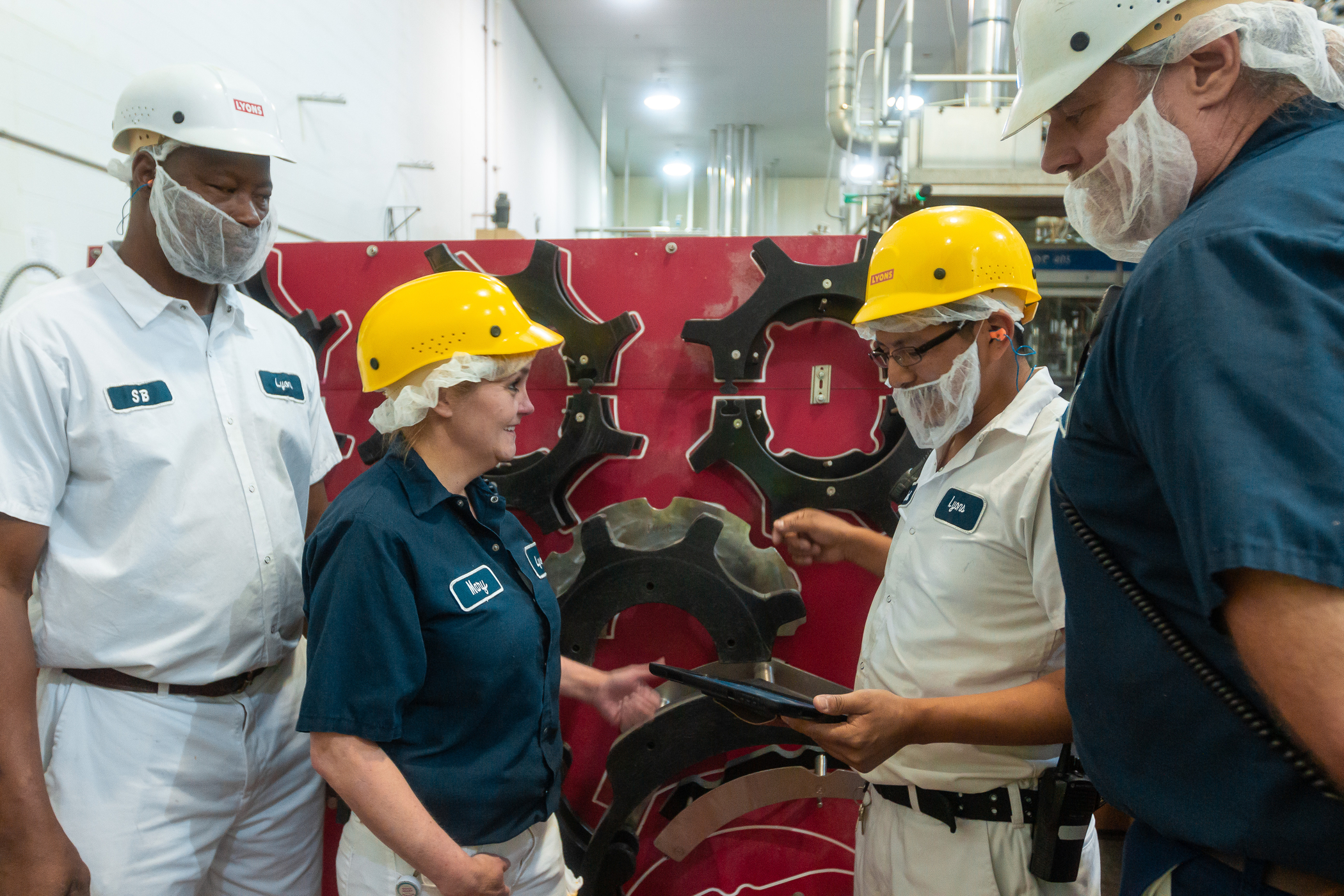
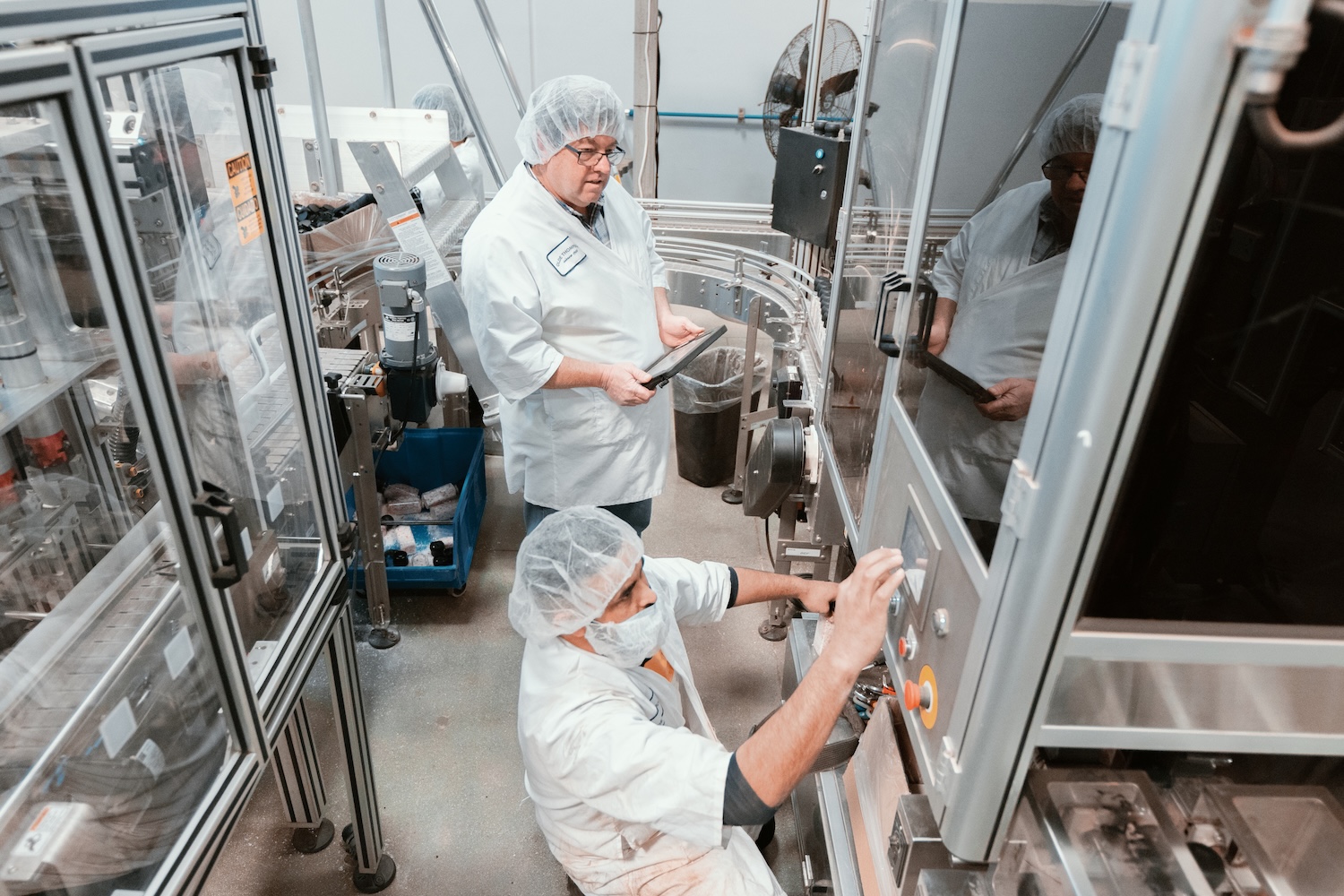
- Autonomous maintenance empowers operators to take ownership of routine maintenance tasks, such as cleaning, inspections, and minor repairs, to keep equipment in optimal condition.
- Planned maintenance shifts maintenance from reactive to proactive by scheduling regular inspections and service, reducing unexpected breakdowns, and extending equipment lifespans.
- Quality maintenance integrates maintenance practices with quality control, aiming to prevent defects by maintaining equipment precision and identifying potential issues before they affect product quality.
- Focused improvement encourages small, continuous improvements by authorizing cross-functional teams to identify and eliminate inefficiencies and chronic problems in the production process.
- Early equipment management applies knowledge gained from previous maintenance experiences to improve the design of new equipment. The goal is to ensure that new machinery is easy to operate, simple to maintain, and reaches full production speed as quickly as possible.
- Ongoing education and training help operators and maintenance teams enhance their skills and understanding of equipment, ensuring effective maintenance practices and fostering a culture of continuous learning.
- The health, safety, and environment pillar creates a safe working environment with zero accidents (a core TPM goal) by eliminating potential hazards related to equipment operation and maintenance activities.
- Administrative TPM applies TPM principles to logistics, scheduling, procurement, and other supporting administrative functions to eliminate waste in the supply chain and office workflows.
The Six Big Losses
TPM's primary goal is to eliminate specific categories of waste called the Six Big Losses. By identifying these losses, a facility can pinpoint why OEE is lower than it should be.
- Breakdowns are the most visible loss. This loss includes any unplanned downtime, such as a machine sidelined by a mechanical or electrical failure. TPM tackles this through planned maintenance to catch issues before they cause a crash.
- Setup and adjustments refers to the time lost when changing a machine over from one product to another. Even though it's "planned," it is still non-productive time. Single-minute exchange of die (SMED) techniques are often used to reduce this loss.
- Small stops (or idling/minor stoppages) are micro-stops, typically lasting less than two minutes. Because they are brief, they are often ignored, but their cumulative effect is a massive drain on OEE.
- Slow running (or reduced speed) happens when equipment is operated below its nameplate (designed) speed. Operators might slow machines down to prevent wear or defects, which is a sign that the machine’s base condition has not been maintained.
- Startup defects are the waste generated from the moment a machine is turned on until it reaches steady-state, high-quality production. It commonly occurs after a changeover or a daily shutdown.
- Production defects are the scrap or rework parts produced during stable, routine production. They are a direct hit to the quality maintenance pillar of TPM and indicates reduced equipment precision.
These losses are divided into three categories that tie back to OEE:
- Availability losses: Breakdowns; setup and adjustments
- Performance losses: Small stops; slow running
- Quality losses: Startup defects; production defects
Total Productive Maintenance and Overall Equipment Effectiveness
To understand the relationship between TPM and OEE, think of them as the strategy and the scorecard: TPM is the methodology used to improve a factory's culture and machine health, and OEE is the metric used to track if those improvements are actually working. OEE measures how well a manufacturing operation is utilized compared to its full potential. It is calculated by looking at three factors:
- Availability: Is the machine running during the scheduled time? (Losses: Breakdowns, setup time)
- Performance: Is the machine running at its max rated speed? (Losses: Small stops, idling)
- Quality: Is the machine producing good parts the first time? (Losses: Scrap, rework)
The standard formula for OEE is:
- OEE = Availability % x Performance % x Quality %
- 95% Availability x 95% Performance x 95% Quality = 85.7% OEE
{{callout2}}
Implementing Total Productive Maintenance
For total productive maintenance to benefit your facility, you have to implement it properly. TPM implementation involves four phases:
1. Preparation Phase
The preparation phase of TPM implementation sets the foundation for success. It starts with securing a commitment from top management for the necessary resources and focus. Leaders should communicate TPM’s benefits clearly, emphasizing the opportunity for efficiency gains and a culture of continuous improvement.
Form a cross-functional steering committee to oversee planning and execution. Assess current processes and equipment conditions to identify areas for improvement, such as recurring breakdowns or inefficiencies. Then develop a roadmap with clear goals, roles, and timelines, and share it with all employees to begin fostering engagement.
2. Introduction Phase
The introduction phase involves actively engaging the entire organization in the TPM principles and objectives. The focus is on building awareness and fostering a culture that supports TPM’s goals of reducing downtime, increasing equipment efficiency, and involving all employees in maintenance activities.
Organize training sessions to educate employees about their roles in TPM and how it benefits their daily work and the entire organization. Introduce key TPM concepts such as autonomous maintenance and continuous improvement, so that everyone understands how their involvement contributes to achieving these objectives.
3. Implementation Phase
The implementation phase is a structured transition from reactive repairs to a culture of proactive ownership. It typically begins with a pilot program on a bottlenecked machine to demonstrate quick wins. Once the pilot proves successful, roll out the fundamentals across the facility, focusing heavily on autonomous maintenance to empower operators and planned maintenance to eliminate the Six Big Losses.
The phase concludes with institutionalization, where TPM becomes standard operating procedure, driven by continuous improvement (kaizen) activities to reach OEE.
4. Consolidation Phase
The consolidation phase of TPM focuses on reinforcing the progress made during the implementation phase and embedding TPM practices in daily operations. The focus shifts from learning and adaptation to standardization and continuous improvement.
Teams analyze the outcomes of implemented TPM activities, such as reduced downtime and improved equipment performance, and use this data to refine processes and address any persistent issues. Best practices are documented and shared across departments to ensure consistency, and regular reviews maintain focus on long-term goals.
The Bottom Line
Total productive maintenance is more than a technical checklist; it is a cultural shift that transforms every operator into an owner of equipment health. By systematically eliminating the Six Big Losses and empowering your team through the Eight Pillars, you move beyond reactive repairs toward the goal of zero shutdowns and zero defects. As your OEE score climbs, you will find that the true value of TPM lies in the sustainable, long-term efficiency that only a collective commitment to excellence can provide. Take the first step in realizing your production maintenance goals today with Redzone’s Reliability software solution.

Frequently Asked Questions
How is total productive maintenance (TPM) different than traditional maintenance?
Ownership is the fundamental difference between TPM and traditional maintenance. In a traditional setting, maintenance is a specialized department you call when something breaks. In TPM, maintenance is a shared daily responsibility integrated into the production process.
What is the role of 5S in total productive maintenance (TPM)?
5S refers to five sequential steps: Sort, Straighten, Shine, Standardize, and Sustain that establish a clean, organized, and standardized base condition for all equipment. It is difficult to maintain what you cannot see, and 5S provides the visibility required for proactive maintenance within TPM.
How do AI and predictive maintenance fit into TPM?
The integration of AI and predictive maintenance (PdM) into TPM is referred to as TPM 4.0. While traditional TPM relies on human observation and scheduled intervals, AI boosts the framework from a time-based model to a real-time, data-driven one.
What are the challenges in implementing TPM?
Common total productive maintenance (TPM) implementation challenges include cultural change, lack of management commitment, and employee involvement. Addressing them quickly and thoroughly is key to a successful rollout.