Ultimate Guide to CMMS Software for Boosting Manufacturing Efficiency
.webp)


published
August 17, 2026
Key Takeaways
CMMS stands for computerized maintenance management system.
CMMS software for manufacturers digitizes, centralizes, and simplifies documentation of all maintenance activities.
Manufacturers use a CMMS to document different aspects of maintenance activity and facility management, including work orders, breakdowns, parts inventory and consumption, and third-party inspections.
What Is CMMS Software?
A CMMS is a software platform that centralizes and manages all maintenance activities across an operation. It replaces manual, paper-based processes with a single digital system for tracking equipment, scheduling preventive work, managing parts inventory, and generating the performance data that maintenance leaders need to make informed decisions.
A mature CMMS provides strategic value to a manufacturer in three ways. First, it documents and tracks past activities. Second, it schedules current activities and gives visibility to them. Third, it optimizes future activities.
Documentation on every work order, including hours worked and parts consumed for every breakdown, preventative maintenance (PM), or other maintenance action, becomes part of the centralized maintenance history record. Asset history and parts inventory are visible to the right teams at the right time.
{{callout1}}
Why Use CMMS?
When a machine goes down unexpectedly, the cost is immediate and compounding: Production stops, schedules slip, and the pressure falls on the person nearest the problem. In many plants, that scenario repeats because maintenance is still managed the same way it was 20 years ago, using spreadsheets, paper logs, and institutional memory. Systems that can't scale don't surface patterns until something has already broken.
A CMMS gives maintenance teams the structure and visibility they need to get ahead of failures instead of constantly responding to them.
How Does a CMMS Work?
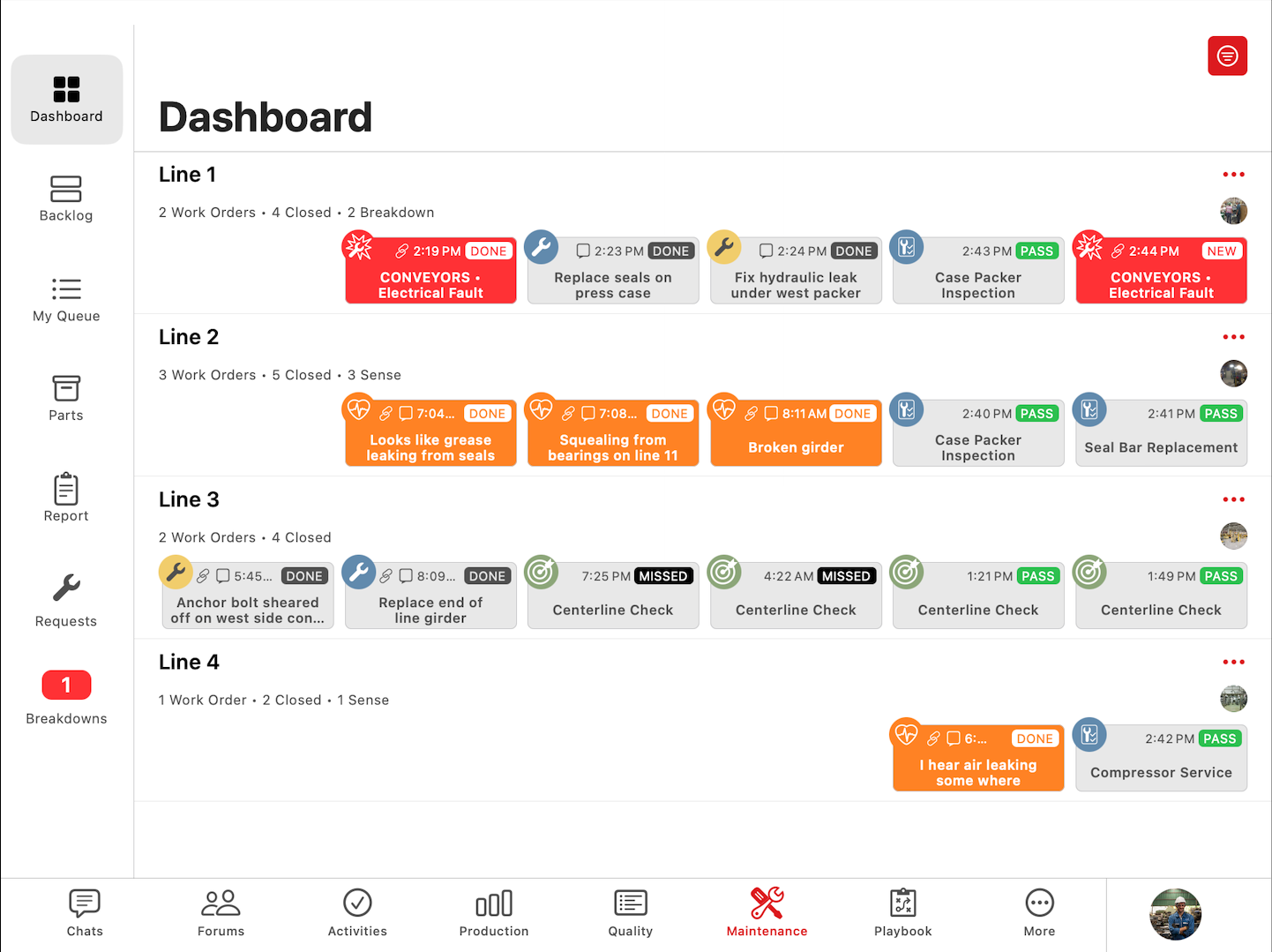
A CMMS's core function is to create a detailed database of critical information about past, active, and future maintenance tasks. Every maintenance activity generates an individual CMMS record. This record contains administrative details about the activity.
Different types of maintenance activities create different types of records in a CMMS. For example, the term "work order" (WO) can refer to preventive maintenance (PM), third-party inspection, or breakdown. These are tagged differently and may even have different templates depending on their priority, flexibility, and impact on the factory.
A preliminary record is created for upcoming work that includes the maintenance tech assigned, line or equipment to be worked on, scheduled date and time, anticipated parts required, and time the work is expected to take.
After the work is completed, the initial estimates are replaced with the actual data, like time to complete the work, parts used, etc., and an accurate record of the work is entered into the history.
{{callout2}}
Key Benefits of CMMS in Manufacturing
While features vary by vendor, a mature CMMS provides these foundational features and functions:
Work Order Management
Work orders are the heartbeat of a CMMS. They are created, assigned, tracked, and closed with outcomes documented. Work order covers scheduled repairs, breakdown resolution, scheduled preventive maintenance, and emergency responses.
Preventive Maintenance Scheduling
A CMMS automates PM scheduling based on fixed time intervals (weekly, monthly, quarterly) or usage thresholds (machine hours, production cycles). Scheduling is the primary lever for shifting from reactive to preventative maintenance. Ensuring PMs happen when they are most effective is the single most impactful way to reduce unplanned downtime over time.
Asset Management
Every critical piece of equipment (i.e., asset) gets a digital profile with its specifications, documentation, maintenance history, and performance trends. When a technician needs to diagnose a recurring failure or a manager needs to build the case for equipment replacement, a CMMS makes that history immediately available, not buried in a filing cabinet or worse, in a tech’s memory.
Spare Parts and Inventory
A CMMS tracks parts' stock levels, links components to specific assets and work orders, and triggers reorder alerts before critical parts run out. The goal is simple: When maintenance is needed, the right part is available, and availability is confirmed before work begins.
Reporting and Analytics
A CMMS generates performance data on equipment downtime frequency, maintenance costs, work order completion rates, and mean time between failures (MTBF). These reports help maintenance teams spot patterns, prioritize investments, and demonstrate the ROI of preventative maintenance programs to leadership.
The Bottom Line
A CMMS is a strategic lever that makes maintenance teams more effective, improving uptime and productivity on manufacturing lines. It gives maintenance teams a structure to move from reactive firefighting to proactive prevention, centralize and simplify administration, and create a transparent record and predictive model. Real value depends on consistent adoption by maintenance teams, thoughtful implementation, and integration with systems around it. Learn how Redzone’s CMMS Software helps operations teams reduce unplanned downtime and increase OEE.

Frequently Asked Questions
What does CMMS stand for?
CMMS stands for Computerized Maintenance Management System. It is a software platform that digitizes and centralizes maintenance operations, replacing paper logs and spreadsheets with a single system for work orders, asset tracking, preventive maintenance scheduling, and spare parts inventory management.
Who uses a CMMS?
Maintenance managers, schedulers, and techs are the primary users of CMMS software. Other users might include operations supervisors or procurement teams.
What is preventive maintenance?
Preventive maintenance (PM) is the proactive, scheduled, routine inspection and service of equipment that prevents failure before it occurs. It’s often focused on components most affected by wear and tear.
How does a CMMS support preventive maintenance?
With a clear record of all activity on each asset, including breakdown repairs, PMs, and inspections, insights about equipment are easily surfaced and PM schedules are optimized. An AI-enabled CMMS has the added benefit of predictive insights and proactive, prescriptive fixes.