Beyond Automation: Why Industry 5.0 is Human-Centric


.webp)
published
August 5, 2026
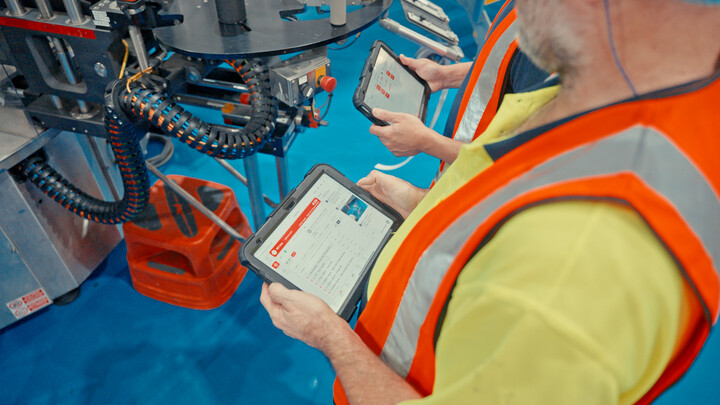
If Industry 4.0 was about digitizing the manufacturing floor to increase efficiency and output, Industry 5.0 is about reintegrating the human element to boost well-being, resilience, and sustainability. Industry 5.0 incorporates technologies like collaborative robots (cobots) and autonomous mobile robots (AMR) for a human-centric approach to manufacturing. Rather than replacing humans, Industry 5.0 uses technology to reinforce human precision and capability. And it could not come at a more essential time for manufacturers.
For 15 years, the manufacturing industry has been running into a brick wall. As part 1 of this series, "Breaking the Productivity Ceiling: The Power of Software-Defined Automation" explained, actual manufacturing productivity in the US remains 4% below its peak in 2010. Factories are tracking more data than ever before, yet it never produced the promised explosion in output.
If that isn't enough, this productivity plateau has met its most dangerous adversary yet: a shrinking, aging workforce that younger generations aren't replacing. With over 25% of the manufacturing workforce over age 55 (2 percentage points higher than the overall workforce) as of 2025, the industry is facing a crisis that traditional, rigid automation simply cannot solve alone.
By shifting the narrative from "Human + Machine" to "Human x Machine," Industry 5.0 technology multiplies the output of human workers on the factory floor. This transformational perspective allows modern manufacturing to be profitable, sustainable, and people-first to conquer the global labor crisis.
Industry 5.0: The Multiplier Effect
Industry 5.0 boosts manufacturing productivity because it optimizes the workers you currently have, increasing throughput and satisfaction without adding labor costs. Industry 5.0 makes manufacturing roles more attractive, as well as safer and more competitive, by offloading repetitive manual tasks and leveraging human ingenuity for more engaging tasks. This is vital for manufacturers facing labor shortages, sustainability mandates, and increasing customer expectations.
The most competitive manufacturers aren't winning on automation alone. According to data published by MIT Sloan, the factories seeing the strongest long-term gains from AI and digital tools are combining human expertise with technology, not replacing either. OECD data backs this up: The gap between technology leaders and laggards is widening, creating a multiplier effect driven by leaders pulling ahead, leaving slow adopters further behind.
The question for manufacturers today isn't whether to adopt Industry 5.0; it's how well they integrate core Industry 5.0 technologies like AI, cobots, and AMRs with their human workforce. Empowering workers with these technologies promises to drive innovation far beyond what automation can achieve alone. Early adopters and mainstream users of Industry 5.0 are creating a multiplier effect that drives innovation far beyond what automation could achieve alone, leaving slow starters further behind the productivity curve.
The data is clear: The most profitable factories are no longer those with the most robots, but those that have successfully integrated technology to empower their human workforce.
Enter the Era of Human-Centric Robotics
The Industry 5.0 transition is part of a larger smart manufacturing transformation, a highly connected and data-driven approach to production that integrates advanced technologies like AI and Internet of Things (IoT) into the workflow.
Smart manufacturing is not only helping to address labor shortages, safety, and productivity. It's driving meaningful business outcomes: a 10%–20% improvement in production output, 7%–20% improvement in employee productivity, and 10%–15% improvement in unlocked capacity without any physical expansion, finds Deloitte. Notably, the analyst firm says, 85% of companies believe that smart manufacturing initiatives will attract new talent to the industry as a vibrant and viable career path.
PWC reports that 74% of employees at these "future fit" companies — the fastest, most agile, and most innovative companies — (vs. 59% at traditional facilities) feel empowered to act on new ideas, aligning with the 70% of executives who "rate 'developing new capabilities internally' as their top means of accessing growth opportunities."
Leading factories keep the human at the center of the loop, emphasizing transparency, involvement, and upskilling to give their workforce a significant competitive advantage.
These advantages are propelling serious investments in smart manufacturing. The market reached a staggering $455 billion in 2025 and is expected to surge to $938.36 billion by 2030.
Collaborative Robots: Removing Productivity Barriers
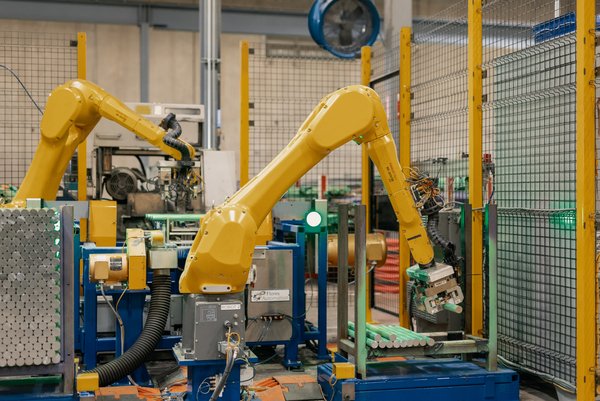
Cobots have grown from niche tools to mainstream drivers of modern smart manufacturing. Unlike traditional industrial robots that operate in isolation, cobots augment human capability by providing the flexibility needed for modern production. Manufacturers are moving away from one-size-fits-all automation approaches toward mixed fleet strategies to meet the needs of a dynamic manufacturing environment.
Research shows implementing cobots in assembly lines can boost productivity up to 30%. For example, Great Lakes Stainless dramatically transformed its production of curved stainless-steel escalator components by integrating a FANUC cobot equipped with a portable laser welder into its shop floor. The automation reduced total cycle time per part 95% — from 3 hours down to just 15 minutes — while improving quality and reducing rework. It also allowed highly skilled welders to redirect their expertise from mundane, repetitive tasks toward complex, high-value custom products.
This illustrates how robotics in smart manufacturing has evolved from replacing humans to empowering workers through proximity and precision. Cobots handle the repetitive, ergonomically difficult tasks, while humans focus on the complex problem solving that creates value for manufacturers. For example:
- AI-driven adaptability: Cobots use AI vision, LiDAR, and force-torque sensors to identify parts scattered randomly in a bin and correct their position in real time. They also remove the need for physical barriers on the factory floor as they can detect a human and automatically adjust to avoid collisions without stopping production.
- Increased uptime: Cobots monitor their own health and alert maintenance before downtime occurs. By flagging maintenance needs early, cobots keep the production line active by preventing unexpected stops.
- Rapid deployment: Users can program cobots directly by teaching them how to do a task, rather than waiting for a specialized programmer to write code. A worker can simply move the robot arm through the desired motions, and the cobot remembers the path, turning coding into a physical demonstration.
- Ergonomic safety: Cobots act as force multipliers by taking over dull, dirty, and dangerous tasks. They can handle heavy lifting and awkward postures, reducing workplace injuries and allowing workers to remain productive and healthy longer.
The cobot investment market is surging as manufacturers move away from rigid, high-cost automation. According to IDC's 2025 Internet of Things Survey, 31% of manufacturers view cobots as an investment priority. The global cobot market was valued at $2.1 billion in 2025 and is projected to grow to $23.9 billion by 2034.
Autonomous Mobile Robots Empower Warehouse Operations
Autonomous mobile robots have added another layer of intelligence to operations teams. While cobots handle the hands-on work of manufacturing products, AMRs enhance the logistics and material handling side of the modern factory.
Manufacturers have tried using automated guided vehicles (AGV) to transport heavy materials or finished goods autonomously around factories and warehouses, but they must follow predefined paths using lasers, magnetic strips, or cameras. Unlike human-operated forklifts or AGVs currently in use, AMRs use AI machine-vision systems to dynamically navigate the warehouse floor, allowing factories to reconfigure their layouts in real time.
For example, L’Oréal saw 100% improvement in weighing station efficiency by replacing manual forklifts with AMRs in dozens of plants worldwide. Because operators no longer need to leave their posts to retrieve materials, L’Oréal could reduce operations from 3 shifts to 2 while also increasing output. Quality and safety also benefited from the change, with a 94.4% right first time (RFT) quality rate and significantly fewer manual handling injuries.
Autonomous mobile robots are transforming smart manufacturing to be more flexible than ever before:
- Mapping the environment: The modern AMR uses simultaneous localization and mapping (SLAM) technology to build and update a map of its environment in real time. AMRs use SLAM for dynamic navigation to instantly calculate a detour, unlike older AGVs that stop if a box is in their path. Manufacturers can change factory layouts quicker than AGVs because AMRs don't require magnetic tape, wires, or floor sensors, saving money on renovation costs.
- Swarming intelligence: AMRs work as a synchronized swarm managed by cloud-based software. Centralized AI systems coordinate the movement of dozens of robots to prevent bottlenecks. Fleet managers can instantly redeploy AMRs between areas, balancing the factory’s workload in real time.
- Eliminating non-value-added travel: AMRs reduce the steps workers must walk to move items between locations. Facilities using AMRs report an 85% cost reduction in moving boxes around their facility, per the 2026 MHI Annual Industry Report.
- Supporting the workforce: AMRs do not need the training or licensing that new workers require, making them a direct response to the global labor gap. Also, 56% of workers who used robots and other physical support devices saw decreases in musculoskeletal disorders, according to a study from the National Safety Council.
The transition from traditional AGVs to fully autonomous systems has triggered a massive investment cycle focused on operational agility. According to IDC's 2025 Internet of Things Survey, AMRs are an investment priority for 32% of manufacturers. By providing a flexible infrastructure, AMRs allow manufacturers to move away from rigid production setups and embrace the mass customization abilities that define smart manufacturing.
The Bottom Line: Human-Centric is the Way Forward
Industry 5.0 is already here, and manufacturers who place workers at the heart of the digital transformation optimize their employees' ingenuity, judgement, and output. Human-centric robotics makes technology a force multiplier to a more resilient and rewarding shop floor.
This alignment between human creativity and robotic precision is the differentiator of Industry 5.0. It drives both increased productivity and better employee satisfaction. Early adopters and mainstream users are widening the gap with lagging companies, empowering their workforce with the tools necessary for long-term survival. Industry 5.0 is not a competitive advantage; it’s a mandate. It’s the model for what manufacturing needs to become to not only survive — but thrive.