Best AI Tools for Manufacturing Operations in 2026



.webp)
published
October 14, 2026
Key Takeaways
AI tools for manufacturing operations can predict equipment failures, inspect quality, assist with planning and scheduling, help engineers, and guide frontline teams.
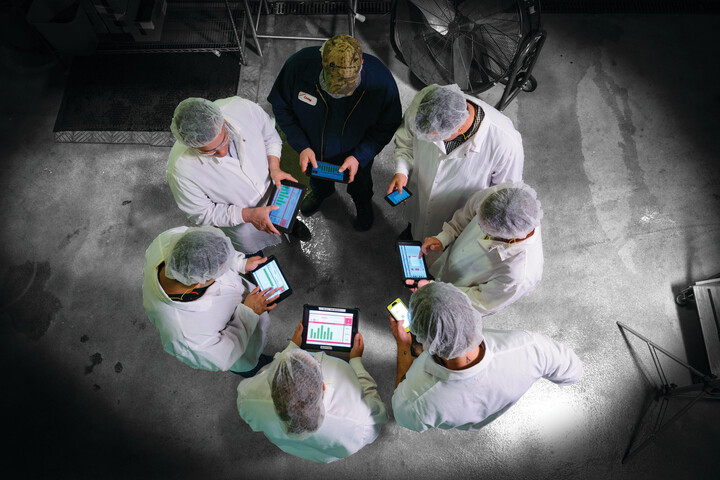
Tools differ by who acts on the output. Broad industrial AI often serves engineers and analysts, while AI built into a connected worker platform puts recommendations in front of operators, supervisors, and technicians.
Measurable ROI comes with a baseline, a named customer, a specific metric, and a person who acts on the recommendation.
Data readiness decides outcomes. Rockwell Automation's research found that manufacturers effectively use only 43% of the data they collect.
Every software vendor in manufacturing has an AI story. A lot of those stories end at a dashboard that someone has to open, interpret, and act on, usually after the shift.
The buying question has changed. Rockwell Automation's 2026 State of Smart Manufacturing report found that 34% of operations are AI-augmented today, and manufacturers expect more than half to be by 2030. Respondents also named artificial intelligence and machine learning the top driver of business outcomes. Today, adoption is easy, but results are harder to attain.
This guide sorts AI tools by the job they do on the plant floor and shows what customers have measured, then gives you five checks for separating a measurable return from an overpromise.
What Counts as an AI Tool for Manufacturing Operations?
An AI tool for manufacturing operations uses machine learning (ML), generative AI, or agentic AI to analyze plant data and help people make faster, better decisions on the floor.
ML spots patterns in sensor, quality, and production data. Generative AI reads and summarizes unstructured information such as operator notes and chat logs. Agentic AI goes a step further. It watches for problems, recommends a fix, and can start a workflow, such as assigning a task or alerting the right person.
Predictive maintenance models have watched pumps and motors for decades. The recent shift is moving AI closer to the people running the line. Redzone's agentic AI overview covers that shift in more depth.
{{callout1}}
Generative AI vs. Agentic AI on the Plant Floor
Generative AI answers questions and summarizes. Ask it why Line 2 ran slow last night and it can pull the pattern from shift notes. Agentic AI acts on what it finds, within limits you set: It can open a work order, assign a follow-up, or send guidance to the line lead.
Most plants start with the first and grow into the second as they build trust in the recommendations.
AI Tools for Manufacturing Operations at a Glance
Five categories cover most of what plants buy. Example tools come from vendors' published materials, and many plants combine more than one category.
Where AI Pays Off on the Plant Floor
The best returns come from resolving a short list of chronic losses. Each shows up in overall equipment effectiveness (OEE), which measures availability, performance, and quality, so a plant that fixes them moves its OEE whether or not it tracks the number daily.
Predicting Downtime and Finding Root Causes
Unplanned downtime is the loss most plants chase first. Siemens' 2024 downtime research puts the cost at about 11% of revenue for the world's 500 largest companies. Sensor-based models catch equipment drift, and frontline-connected AI catches patterns people write down but never connect.
Operators at Crest Foods, an early ChampionAI adopter, were logging power glitches in Redzone chats, but they never showed up on a standard downtime report. No one noticed until Champion AI surfaced the pattern.
Cutting Changeover Time
Changeovers drain capacity in every plant that runs them. Marion Kessler, VP of Operational Excellence and Continuous Improvement at Sauder Woodworking, said changeovers averaged 19 minutes before ChampionAI, and that he recently watched one finish in less than 90 seconds.
Redzone cites a 93% cut in changeover time at Sauder. Check what your own baseline looks like before you set a realistic improvement goal.
Reducing Scrap and Giveaway
Quality drift costs money long before it triggers a rejection. In ChampionAI's Quality Lead view, a statistical process control (SPC) alert can flag a trend, such as sample weights creeping high on one line, and show the dollars at risk in giveaway while the run is still going. A person sees it, adjusts the process, and the loss stops early.
Closing Skills Gaps
Some recurring losses trace back to how a task gets done, not to the machine. ChampionAI analyzes OEE losses, quality events, and downtime patterns to find issues linked to skills gaps and recommends targeted training through Redzone Learning. The loop is useful for any plant with high turnover.
Best AI Tools for Manufacturing Operations by Job
No single tool covers every job. Pick by the loss you most need to remove. The entries below cover the ones this guide can describe from materials published as of October 2026.
Redzone ChampionAI: Frontline Execution
ChampionAI lives inside Redzone's Connected Workforce Solution and learns from a plant's own run history, SOPs, maintenance records, and frontline activity. Role-specific Champions cover Line Leads, Operations Leads, Quality Leads, Maintenance Leads, and Learning Leads, and each deploys agents focused on one business result.
Agents can create workflows, assign tasks, and coordinate the team without waiting for someone to notice a problem. Redzone coaches work with each team on turning the recommendations into daily habits.
{{callout2}}
Siemens Senseye: Predictive Maintenance
Siemens' Senseye Predictive Maintenance focuses on condition monitoring and forecasting equipment failures. It suits plants with instrumented equipment and a maintenance team ready to act on forecasts.
Siemens' True Cost of Downtime 2022 report says Senseye clients showed an 85% improvement in downtime forecasting accuracy and a 50% reduction in unplanned machine downtime. Those figures come from Siemens, not an independent study, so ask for a reference customer in your industry. The outputs mostly serve maintenance and reliability roles.
Siemens' Senseye Predictive Maintenance focuses on condition monitoring and predictive maintenance, the use case Siemens calls its biggest lever. It suits plants with instrumented equipment and a maintenance team ready to act on forecasts. The outputs mostly serve maintenance and reliability roles.
Poka: Connected Worker AI
Poka describes its platform as an industrial AI-augmented connected worker platform. It combines skills management, digital work instructions, daily management, communication, and analytics, and its AI converts paper-based training material into digital steps.
Like ChampionAI, it targets frontline roles. Ask how its AI models learn from your plant's data and what they trigger on the floor.
Machine Vision and Specialist Tools
Vision vendors such as Cognex and Overview AI target inspection, and other specialist tools cover narrower jobs. They also need their own data, integration work, and owners, so plan for a portfolio instead of one platform.
How AI Built Into a Connected Worker Platform Differs From Broader Industrial AI
Both approaches use ML, and both can deliver value. The differences show up in three places.
What Data the AI Learns From
Broad industrial AI usually learns from sensors, manufacturing historians, and quality systems. AI inside a connected worker platform also learns from the human side of production: shift chats, operator notes, SOPs, and training records. That is where many root causes first appear in plain language.
Who Sees the Output
Industrial AI tends to deliver insight to engineers and analysts through dashboards and reports. Connected worker AI sends guidance to the line lead or technician who can act in the next five minutes.
What Happens Next
An insight in a dashboard still needs a person to see it. A recommendation inside the workflow can arrive with a task, an owner, and a deadline attached. ChampionAI, for example, logs and traces every recommendation and action, and agents work within the escalation rules and limits a plant sets.
How to Tell Measurable ROI From Overpromising
AI marketing runs hot. These five checks separate tools that deliver from tools that demo well:
- Ask for the baseline: A result means little without a starting point. Ask what the metric was before the tool, how the team measured it, and over what period. Then compare that to your own numbers.
- Ask for a named customer and a specific metric: Specific results include a changeover time, a defect rate, or a turnover figure with a customer attached. Vague results sound like efficiency gains. Ask to speak with a plant like yours.
- Ask who acts on the recommendation: Every AI output needs a person or a workflow on the receiving end. If the answer is "the team checks the dashboard," expect low adoption.
- Check the guardrails and audit trail: Find out what the AI can do without approval, how you set limits, and whether the system logs every recommendation and action. Plants in regulated industries should treat this as a requirement.
- Check your data first: Rockwell Automation's research on AI in manufacturing found that manufacturers use only 43% of the data they collect effectively. Before any purchase, check whether your team captures downtime reasons, quality results, and run history consistently. Tools that learn from daily frontline activity can help because they start from data your team already produces.
Why Redzone Is the Right Choice for AI in Manufacturing Operations
ChampionAI works inside the daily workflow of a Redzone deployment, so recommendations reach line leads, quality leads, and maintenance teams while a problem is still small. People stay in charge: agents recommend, your team decides, and the system logs every action.
Redzone coaches with real frontline experience help teams build the habit of acting on what the AI surfaces. See how ChampionAI turns plant data into action on your floor.

Frequently Asked Questions
What are the best AI tools for manufacturing operations in 2026?
The best tool depends on the job. Predictive maintenance, machine vision, AI-assisted scheduling, and frontline-connected AI each solve different problems. Start with your costliest loss and match the tool to it.
How are manufacturers using AI to improve OEE, predict downtime, and reduce scrap?
Manufacturers use AI to spot early signs of equipment trouble, flag process drift before it creates scrap, and find patterns in operator notes. The strongest results come when a person receives the alert and acts on it quickly.
Which AI manufacturing software delivers measurable ROI?
Look for named customers, a stated baseline, and a specific metric such as changeover time or defect rate. Be wary of broad efficiency claims that lack before-and-after numbers or a timeframe.
How does AI in a connected worker platform differ from industrial AI?
Connected worker AI learns from frontline activity such as chats, run history, and SOPs, and sends recommendations to operators and supervisors. Broader industrial AI usually analyzes sensor and historian data for engineers.
Does AI replace frontline workers in manufacturing?
No. ChampionAI, for example, puts recommendations in front of a person before they act unless the plant authorizes full automation. The goal is to get problems to the right person faster and carry context across shifts.
.jpg)