What Is SMED? Single Minute Exchange of Die Explained


.webp)
published
September 15, 2026
Key Takeaways
SMED (single minute exchange of die) is a Lean method for cutting equipment changeover time to under 10 minutes by moving setup work outside the machine stoppage.
Separating internal setup (machine stopped) from external setup (machine running) typically reduces changeover downtime by 25% to 50% before any capital investment.
Faster changeovers make smaller batches economical, which lowers inventory and helps production follow real demand.
Gains last when the improved changeover becomes the documented standard, owned by frontline teams and tracked against OEE.
What Is SMED?
SMED stands for single minute exchange of die — a Lean manufacturing method for reducing equipment changeover time to a single-digit number of minutes (under 10).
Developed by Japanese industrial engineer Shigeo Shingo as part of the Toyota Production System, SMED works by moving as much setup work as possible outside the machine stoppage, then streamlining whatever must happen while the line is down. Shingo documented an average 94% reduction in changeover times across the companies he worked with.
Changeovers are easy to overlook because they're planned, but every minute a line sits idle between products is capacity you've already paid for and can't get back. As manufacturers run more SKUs in smaller batches, those minutes multiply.
SMED Meaning: Internal vs. External Setup
The "single minute" in SMED refers to single digits, not 60 seconds. The method has one distinction:
- Internal setup: tasks that can only be performed while the equipment is stopped — removing the old die, fitting the new one, making connections.
- External setup: tasks that can be performed while the equipment is still running — staging tools, preheating the next die, retrieving materials, completing paperwork.
Most changeovers treat everything as internal by default: only when the line stops do operators start gathering tools and hunting down a missing bolt. SMED reverses that.
Anything that can happen while the machine is still producing the previous batch moves outside the stoppage, and what remains gets simplified until the stoppage is as short as possible.
{{callout1}}
How to Implement SMED in 4 Steps
The SMED system has three major phases, performed in sequence. The entire sequence can be iterated.
1. Observe and Document: Record a full changeover on video and timestamp every task. Involve the operators who run it — most frontline teams know which steps are genuine requirements and which are workarounds for missing tools or unclear standards. The baseline measurement matters because you can't prove improvement without it.
2. Separate Tasks: Go through the changeover task by task and consider whether the machine needs to be stopped for each one. Move everything that doesn't need to be done during the stoppage to before or after. This step requires no capital investment and typically cuts changeover downtime by 25% to 50% on its own.
3. Convert Internal to External: Some tasks that look internal can be reengineered to happen while the line runs. Preheat dies in advance instead of warming them in the press. Standardize fixture heights so adjustment happens off the machine. Use intermediate jigs so the next setup is assembled and aligned before the stoppage begins.
4. Streamline What Remains: Replace bolts with functional clamps, eliminate adjustments in favor of fixed settings, run tasks in parallel where two operators can safely work at once, and put every tool at point of use. Then document the new method and train every shift on it so the improvement doesn't depend on who is working.
SMED Example in Manufacturing
Imagine a beverage line that switches flavors in 90 minutes. The team records a changeover and finds operators spending 30 of those minutes gathering gaskets, fittings, and sanitation supplies while the line sits idle. Moving that work ahead of the stoppage — a staged changeover cart, chemicals prepared in advance, paperwork completed during the previous run — cuts downtime to 60 minutes without spending a dollar.
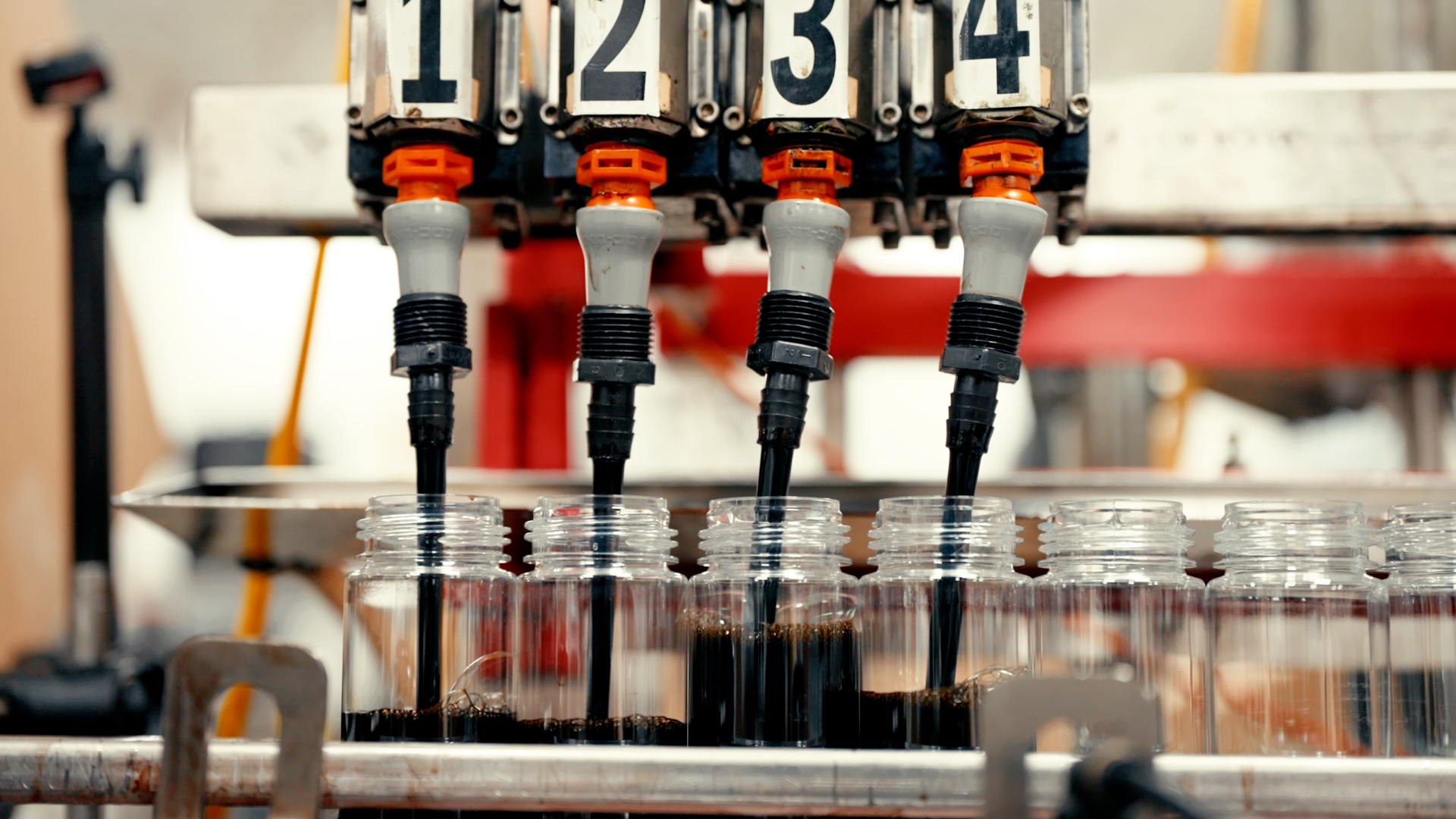
Converting comes next. The team pre-assembles fill-head fittings on a spare manifold so the swap becomes plug-in rather than build-in-place, and standardizes settings so nothing needs adjustment after installation. Downtime falls to 25 minutes.
Streamlining handles the rest: quick-release clamps on the guide rails, color-coded change parts, and two operators working opposite ends of the line in parallel bring the changeover under 10 minutes. At one changeover per day, the line recovers roughly 40 hours of production time a month (capacity the plant already owned).
SMED Pros and Cons
Benefits of SMED
- Recovered capacity: Changeover time counts against availability — one of the three factors in OEE. Shorter changeovers convert idle minutes directly into production time.
- Economical small batches: When a changeover costs 10 minutes instead of 90, short runs stop being a penalty, lowering inventory and the working capital tied up on the floor.
- Flexibility: Lines that change over quickly can follow true demand versus long frozen schedules.
- Better quality at startup: Fixed settings reduce trial-and-error adjustment, cutting startup rejects and scrap.
Limitations of SMED
- Only fixes changeover downtime: SMED targets changeover losses specifically. If your biggest availability losses are breakdowns or material shortages, start with root cause analysis instead.
- Gains erode without standardization: A kaizen event can cut a changeover dramatically in a week — and the gains erode within months if the new method isn't standardized, trained, and audited.
- Not every changeover is worth the effort: Prioritize by frequency multiplied by duration. A 90-minute changeover that happens daily matters far more than a four-hour changeover that happens twice a year.
{{callout2}}
How to Improve SMED: Optimization Tips
Once changeovers hit single digits, the work shifts from reduction to consistency.
- Measure continuously: Track every changeover against its standard time and treat variation as a signal
- Keep the frontline in the loop: Review changeover data with the operators who run them. They’ll likely spot the next constraint before the monthly report.
- Re-standardize after gains: When the standard improves, update documentation and retain immediately so every shift runs the same methods.
- Extend vs restart: Apply the same separate-convert-streamline sequence to the next-worst changeover on the priority list.
Digital Tools for Single Minute Exchange of Die
SMED predates the digital era, but modern tools remove its biggest friction points.
- Video analysis simplifies the observation step.
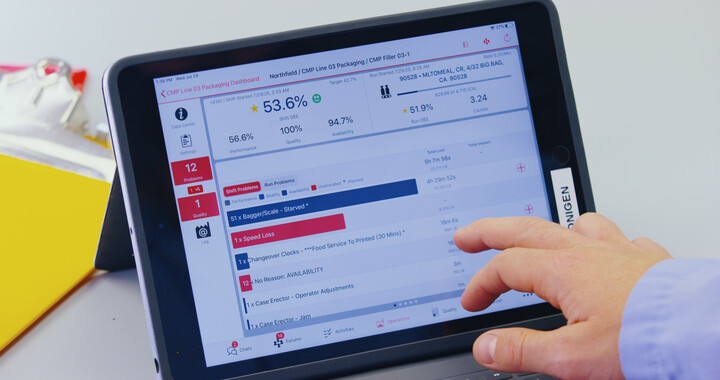
- Digital work instructions put the standardized changeover method on the line with photos and timestamps, rather than in a binder.
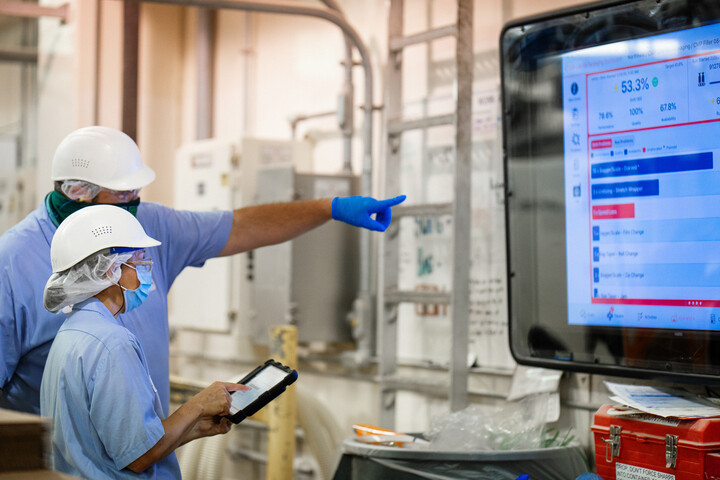
- Real-time production monitoring automatically captures every changeover, so teams see actual-versus-standard times.
- Connected workforce platforms let operators flag problems and share fixes across shifts as they happen.
SMED and Lean Manufacturing
One of the core tools of Lean manufacturing, SMED sits alongside methods like kaizen and total productive maintenance. Quick changeover is what makes small-batch, pull-based production possible; without it, large batches remain the only economical option, and the waste of overproduction and excess inventory follows.
If you're building a Lean program, SMED is one of the strongest places to start because the results are visible, measurable, and fast.
The Bottom Line
SMED turns changeover time from a fixed cost into a controllable one. The manufacturers who keep the gains treat faster changeovers as a documented standard — owned by frontline teams and tracked against OEE — rather than a one-off project.
Done well, it buys you capacity, leaner inventory, and a line that can keep pace with what customers actually order.
See how Redzone's Productivity software helps frontline teams standardize changeovers and track every one against its target in real time.

Frequently Asked Questions
How does SMED relate to equipment changeover time?
SMED is the method for reducing equipment changeover time. It separates setup tasks that require a stopped machine from those that don't, moves the second group outside the stoppage, and streamlines what remains (with a target of under 10 minutes).
Who benefits the most from using SMED?
Manufacturers running frequent changeovers benefit most: high-mix operations, contract manufacturers, and food and beverage plants switching products, flavors, or allergens daily. The more often a line changes over, the faster SMED pays back.
What is the difference between SMED and quick changeover?
They describe the same goal. Quick changeover is the general practice of reducing setup time; SMED is the specific methodology — separating, converting, and streamlining setup tasks — most often used to achieve it.
How does SMED improve OEE?
Changeover time counts against availability, one of the three factors in overall equipment effectiveness (OEE). Shorter changeovers increase the share of scheduled time spent producing, which raises availability and overall OEE.