What Is Cycle Time? Definition, Formula, and Optimization Strategies



.webp)
published
September 15, 2026
Key Takeaways
Cycle time measures how long a team actively spends completing one unit of work — from the moment processing starts to when the unit moves to the next stage.
Calculate it by dividing net production time (total shift time minus planned downtime) by the number of units produced.
Cycle time differs from lead time, which includes wait and queue time, and from takt time, which sets the customer-demand pace your cycle time must match.
Enforcing WIP limits, automating repetitive steps, and standardizing work instructions are the fastest levers for reducing cycle time without sacrificing quality.
Inconsistent measurement — different operators starting and stopping the clock at different points — is the most common reason for unreliable cycle time data.
What Is Cycle Time?
Cycle time measures the exact duration a team actively spends processing a specific task, service, or product from start to finish. In manufacturing, this clock starts the moment an operator picks up raw materials or begins working on a component, and it stops only when the finished unit moves to the next stage of production.
Over the years, this metric has evolved far beyond its roots in Lean manufacturing. Today, knowledge workers and software engineers also use cycle time to track how long it takes to complete a task after active work begins.
To truly master this metric, you must differentiate it from other critical operations measurements like lead time and takt time:
- Lead time: This spans the entire journey from the customer's initial order to the final delivery. While cycle time only measures active production, lead time includes everything, such as the time the order sits in a queue or waits in a warehouse.
- Takt time: This represents the maximum allowable time to produce a product in order to meet customer demand. While cycle time measures how fast you are working; takt time tells you how fast you need to work.
{{callout1}}
How Does Cycle Time Differ in Manufacturing vs. Software?
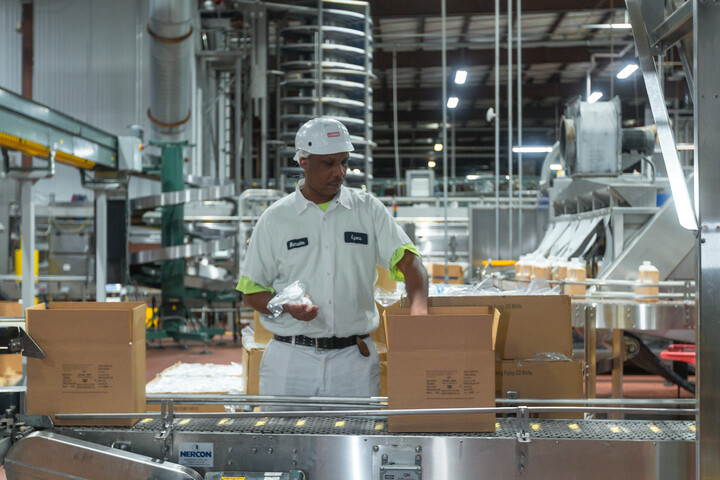
In physical manufacturing, teams measure cycle time by tracking the exact duration a machine or assembly line spends producing a single tangible unit. Because a physical product moves sequentially through heavy machinery and assembly stations, material constraints dictate the pace. Consequently, bottlenecks manifest as literal piles of excess inventory stacking up on the factory floor. This chokes the workflow and signals an immediate, visible imbalance in production capacity.
In software engineering, teams operating in Agile and Kanban environments measure cycle time by tracking the time elapsed from the moment a ticket enters the "In Progress" column to the moment developers deploy it or mark it "Complete." Bottlenecks are harder to identify in software environments, hiding within developer tools as bloated digital work-in-progress (WIP) lists.
The Cycle Time Formula: How to Calculate It
Calculate cycle time with:
Cycle Time = (Net Production Time / Number of Units Produced)
This formula measures the average time a team or machine takes to complete a single unit of work. By dividing the actual time spent working by the total output, you reveal exactly how fast your operation delivers results.
Manufacturing Example: Automotive Part Assembly
Imagine an automotive assembly line running a standard 8-hour shift with 1 hour of planned breaks that produces an average of 210 units.
- Calculate net production time: To find the true net production time, managers must subtract any planned downtime from the total shift time. Total shift time (480 minutes) - Planned breaks (60 minutes) = Net production time (420 minutes)
- Apply the cycle time formula: 420 minutes / 140 units = 3 minutes per part
The assembly line completes one automotive part every 3 minutes.
The Benefits of Optimizing Cycle Time
Measuring and optimizing cycle time metrics transforms raw operational data into a powerful competitive advantage. By tracking exactly how long tasks take to complete, businesses enhance their predictability, allowing sales and logistics teams to provide customers with highly accurate delivery and shipping dates.
This tracking also turns a spotlight directly onto hidden bottlenecks. Managers no longer guess where delays happen as the data highlights where tasks stall or where suboptimal resource allocation starves a critical process of the support it needs.
Cycle time optimization aggressively cuts unnecessary business costs. When teams shrink the time it takes to move a product or service from start to finish, they automatically reduce bloated WIP inventory. In manufacturing, this eliminates expensive warehouse holding costs and frees up valuable floor space. In knowledge work and software development, it limits costly context-switching and optimizes team overhead.
Ultimately, improving cycle times accelerates cash flow and maximizes profit margins by squeezing waste out of every operational hour.
{{callout2}}
Common Pitfalls in Tracking Cycle Time
When teams attempt to measure or manipulate cycle time data, they often fall into critical traps that warp their metrics and damage operations. Watch out for these common errors:
- The quality vs. speed trap: Pressuring teams to lower cycle times blindly may force workers to rush, skip testing, or compromise safety. Sacrificing product quality and process integrity for speed often triggers surges in defects, rework, and customer complaints that wipe out any initial time savings.
- Inconsistent workflow triggers: Teams must establish standardized start and stop states across the organization. If one CNC operator starts the clock when they press the machine's "start" button, while another starts it when they pick up the raw blank from the conveyor, the resulting cycle time data is unreliable and invalid for comparison across shifts.
- Ignoring hidden queue time: Even during active phases, some tasks may sit idle. For example, a component may wait 2 hours for a supervisor's inspection signature. Overlooking these passive wait times makes the process look more efficient than it is.
How To Reduce Cycle Time
To minimize cycle time and accelerate your workflow, you must systematically eliminate waste, friction, and delays from your pipeline. Follow these four practical strategies to optimize your operations:
- Limit work in progress: Stop letting teams juggle too many tasks at once. By enforcing strict WIP limits, you force workers to finish existing jobs before starting new ones, which eliminates multitasking and the hidden time tax of switching tasks.
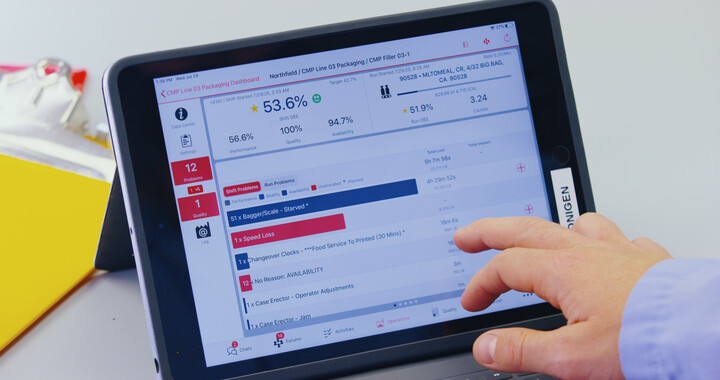
- Automate repetitive steps: Identify predictable, manual tasks within your pipeline and hand them over to technology. Automating routine data entry, material handoffs, and quality verification checks using connected workforce software removes human error and shaves hours or days off your active processing time.
- Standardize work instructions: Document the most efficient way to complete every task and turn it into the baseline standard. Clear, visual instructions, preferably delivered digitally, prevent confusion, reduce variance between shifts, and stop workers from wasting time reinventing the wheel.
- Cross-train your resources: Train your team members to handle multiple roles across the workflow. Cross-training eliminates single-point-of-failure dependencies, allowing you to dynamically reallocate staff to support struggling stations before a bottleneck forms.
It's worth noting that throughput and cycle time on a fixed line are inversely related. If you increase cycle time on a workstation, throughput will drop.
The Bottom Line
Optimizing cycle time transforms chaotic manufacturing workflows into highly predictable, cost-effective engines of business growth. By mastering this metric, leadership teams unlock hidden capacity, slash operational waste, and consistently hit customer delivery dates. Ultimately, sustaining a competitive edge requires real-time visibility into manufacturing operations. To see how automated tracking can transform your production floors, book a demo with Redzone today.

Frequently Asked Questions
What happens if our cycle time exceeds our takt time?
When cycle time exceeds takt time, your production line runs slower than the rate of customer demand. This gap triggers immediate operational issues, such as missing shipping deadlines, building backlogs, and extending customer wait times. To correct this, either eliminate bottlenecks to reduce your cycle time or adjust staffing levels to boost capacity.
What is the difference between ideal cycle time and actual cycle time?
Ideal cycle time represents the theoretical minimum time required to produce a single unit under perfect conditions. Actual cycle time measures reality, tracking the average time it realistically takes to complete a unit during a shift. Subtracting ideal cycle time from actual cycle time reveals speed losses and operational inefficiencies.
What's the difference between cycle time and lead time?
Lead time measures the total time from when a customer places an order to its delivery at their location. It's influenced by internal manufacturing processes as well as procurement and logistics. Cycle time measures the active time it takes the line to manufacture a product. It's influenced by internal manufacturing processes.
How does reducing cycle time improve overall equipment effectiveness (OEE)?
OEE measures manufacturing productivity through availability, performance, and quality. Minimizing cycle time drives up the performance score because it eliminates small stops, slow cycles, and mechanical idling. When a machine runs at optimal speed without sacrificing product quality, your overall OEE score climbs.