Kaizen Events: A Practical Guide to Rapid Process Improvement



.webp)
published
September 13, 2026
Key Takeaways
A Kaizen event is a focused 3-to-5-day workshop where a cross-functional team maps, analyzes, and re-engineers a specific process bottleneck — start to finish, in a single week.
Standard Kaizen is a daily cultural habit of incremental improvement; a kaizen event is a time-bounded sprint reserved for complex problems that daily adjustments can't resolve.
Kaizen events work best for urgent, cross-functional problems with a defined but narrow scope. They fail most often when scope is too broad, frontline workers are excluded, or executive sponsorship is absent.
Sustainability requires more than Day 5 documentation: 30-, 60-, and 90-day performance audits, visual management tools, and digital work instructions keep teams from reverting to old habits.
The event blueprint runs from pre-event scoping through execution, implementation, and standardization. The gains depend as much on post-event follow-through as on the workshop itself.
The Ultimate Guide to Kaizen Events: Driving Rapid Process Improvement
What Is a Kaizen Event?
A Kaizen event is a highly structured, 3- to 5-day intensive workshop designed to solve a specific, targeted problem. During this window, a cross-functional team is pulled away from their regular daily duties. They gather in a dedicated room to map out a current process, identify its flaws, brainstorm solutions, and physically implement those changes before the week is over.
Kaizen is a Japanese philosophy that means "continuous improvement" or "change for the better." Rather than a one-time project management tool, Kaizen is a deeply ingrained organizational culture focused on continuous, incremental improvements to eliminate waste and optimize processes.
What's the Difference Between Kaizen and a Kaizen Event?
Imagine walking into a workplace where every single employee, from the frontline assembly worker to the CEO, spends a few minutes each day looking for ways to make their job safer, simpler, or more efficient. But what happens when a business hits a massive operational bottleneck that a few small, daily tweaks just cannot fix?
That is where a Kaizen event, also called a "Kaizen blitz" or a "rapid improvement event," comes into play.
The core difference between standard Kaizen and a Kaizen event comes down to habits versus initiatives. While standard Kaizen is a steady cultural habit of minor adjustments made by individuals over months and years, a Kaizen event is a high-energy, fast-paced team initiative.
Think of daily Kaizen as maintaining a healthy diet and lifestyle, while a Kaizen event is a focused, 3-day detox to reset a specific system. Both are essential for operational excellence, but one provides the steady foundation while the other delivers the rapid breakthrough.
{{callout1}}
When to Hold a Kaizen Event (and When to Avoid One)
Deciding when to pull a team away from their daily operations for a multiday workshop requires careful strategic consideration. Forcing a Kaizen event onto the wrong type of problem can derail team morale and waste valuable resources.
The ideal opportunity for a Kaizen event is a complex, cross-functional process bottleneck where a delay in one department causes a ripple effect across others. This includes problems that simply cannot be resolved by individuals working in silos.
Look for urgent, highly visible issues where the root cause is unclear, yet the scope is narrow enough that a dedicated team can realistically map, analyze, and re-engineer the process within a single week. If the problem is critical to business performance but has lingered due to conflicting departmental priorities, it is ripe for a rapid improvement intervention.
Avoid holding an event if warning signs suggest the issue is too broad to be solved in a single week, such as improving overall company efficiency. Furthermore, if you don't have baseline data or clear performance metrics, the team will waste days just trying to understand the current state rather than implementing solutions. Finally, if a problem already has an obvious, predefined solution or if leadership is unwilling to grant the team the authority to make immediate structural changes, avoid a Kaizen event in favor of direct administrative action.
The Core Benefits of Holding a Kaizen Event
The most immediate return on investment (ROI) for a Kaizen event is the rapid delivery of quantifiable results. Because the workshop compresses months of traditional project management into a single week, organizations can see near-instant waste reduction, shortened lead times, and significant efficiency gains.
Teams leave the event with a newly streamlined process that is already up and running by physically eliminating non-value-added steps, optimizing layouts, and standardizing workflows. These tangible improvements directly impact the bottom line and provide momentum that can energize an organization's continuous improvement journey.
Kaizen events also serve as a powerful catalyst for cultural transformation. Gathering a cross-functional team for intensive work naturally breaks down legacy operational silos and fosters cross-departmental collaboration. Employees who rarely interact gain empathy for how their choices impact colleagues.
Most importantly, Kaizen events drive employee engagement by empowering the frontline. Rather than new procedures handed down from executives, the workers who perform the tasks get the tools, time, and authority to design their daily workflows. This breeds a strong sense of ownership, improving morale and long-term adherence to the newly established processes.
How to Run a Kaizen Event: A Step-by-Step Blueprint
Running a successful Kaizen event requires moving from chaotic brainstorming to disciplined execution. To make it happen, organizations follow a structured, chronological roadmap divided into clear phases. Here is the step-by-step blueprint for planning, executing, and finalizing a rapid improvement event:
- Pre-event planning: Before the event, define the scope and boundaries of the project. Fill out a project charter outlining the problem statement, goals, and metrics. Assemble a cross-functional team of 6-10 people, ensuring at least half are frontline operators who do the job daily. Finally, gather baseline data, so the team does not waste workshop time trying to measure the current state.
- Execution week (days 1-3): Kick off the Kaizen meeting with a brief training session on Lean principles and identifying waste. Then map the current state process using a value stream map or swimlane diagram. Next, conduct a Gemba walk to observe the process in action and spot the 8 wastes of Lean. By Day 3, brainstorm the future state and map out the newly optimized workflow.
- Implementation and daily alignment (days 3-4): Bridge the gap between the old process and the new design. Physically rearrange workstations, eliminate unnecessary steps, and test solutions in real time. To keep this high-velocity work aligned, institute a daily Kaizen meeting structure: morning stand-up meetings to assign tasks, and afternoon check-ins to review progress, log obstacles on a Kaizen board, and pivot strategy as needed.
- Standardization and close-out (day 5): On the final day, shift the focus from experimenting to locking in the gains. Document the new workflow by creating standard operating procedures (SOP), visual workplace controls, and training materials to ensure the changes stick. Close the event with a presentation to executive sponsors showcasing the quantifiable improvements, then celebrate the team's hard work.
{{callout2}}
How to Measure Kaizen Event Impact & Ensure Sustainability
The true measure of a Kaizen event’s success lies in sustaining the performance process for the long term. To accurately judge impact, organizations must rely on the concrete, quantifiable baseline metrics established during the pre-event planning phase. Once the changes are live, track the identical key performance indicators (KPIs) — such as cycle time, defect rates, or inventory levels — immediately following implementation.
To check that gains are not just a temporary spike, do formal performance reviews at regular, strict intervals, specifically at the 30, 60, and 90-day marks. These post-event touchpoints hold the team accountable and allow leadership to verify that the numbers are trending in the right direction.
However, even the most brilliant process design will naturally degrade without a deliberate sustainability plan.
- To prevent teams from slowly sliding back into comfortable old habits, embed permanent controls into the daily routine using digital work instructions.
- Establish regular audit schedules where managers physically walk the floor to verify compliance with the new standard operating procedures.
- Visual management tools like shadow boards for tools, color-coded floor markings, and real-time production-tracking boards make deviations from the new standard instantly apparent to anyone walking by.
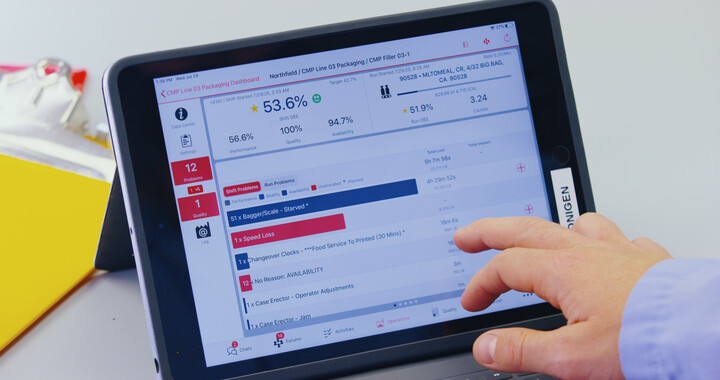
Connected workforce software that includes these capabilities makes the new standard visual and auditable. This naturally makes sustainability an automatic part of the daily culture rather than an afterthought.
Common Kaizen Event Pitfalls to Avoid
Even the most well-intentioned Kaizen events can fall flat if organizations succumb to predictable traps. One of the most critical pitfalls is failing to secure active executive sponsorship. When upper management views a Kaizen event as a minor departmental task rather than a strategic priority, they may deny the necessary resources, authority, and long-term commitment needed to make lasting structural changes.
Another common misstep is scoping the event too broadly. Attempting to fix an entire supply chain in five days, rather than focusing on a single bottleneck like the packaging station, creates paralysis by analysis. The week ends with a mountain of incomplete action items, leaving the team feeling frustrated, burnt out, and disillusioned with the continuous improvement process altogether.
Excluding frontline workers from the design and decision-making phases is a critical mistake. When a team consists solely of engineers and managers in a conference room dictating how a shop floor process should work, their plans may fail when exposed to real-world workplace friction.
Finally, many organizations suffer from post-event amnesia by neglecting the open action lists after the high-energy workshop. If they don't follow up on even a minority of tasks that require outside technical or IT support, the entire project stalls, and the team will default back to their old, broken habits.
The Bottom Line
A Kaizen event is one of the most powerful tools to rapidly shatter operational bottlenecks and re-energize the workforce. By combining a week of focused, cross-functional collaboration with a long-term plan for process sustainability, businesses can convert immediate waste reduction into lasting cultural change.
True operational excellence thrives when these breakthrough events seamlessly integrate with the daily habit of continuous improvement. To see how connected workforce software can maximize the impact and sustainability of your next improvement project, book a demo with Redzone today.

Frequently Asked Questions
What does the word "Kaizen" mean?
Kaizen is a Japanese term that translates to "change for the better" or "continuous improvement." In a business context, it's a philosophy of making regular, incremental changes to eliminate waste, improve quality, and optimize efficiency across an entire organization.
How long does a Kaizen event last?
The intensive portion of a Kaizen event typically lasts 3 to 5 consecutive days. However, a successful event spans a few weeks when you include the pre-event scoping phase. And 30-, 60-, and 90-day post-event performance audits extend the time.
Who should be on a Kaizen event team?
A typical team consists of 6 to 10 cross-functional members. Crucially, at least half of the team should be the frontline operators who do the process every day. The remaining slots are filled by a trained facilitator, an executive sponsor, and upstream or downstream colleagues who interact with the process.
How do you choose the right problem for a Kaizen event?
Look for a problem that is urgent, clearly bound, and cross-functional. If a process bottleneck is causing systemic delays, affecting multiple departments, and can realistically be mapped, analyzed, and re-engineered within a single week, it is an ideal candidate for a Kaizen event.