Shop Floor Management: Best Practices for Production Leaders


.webp)
published
September 29, 2026
Key Takeaways
Shop floor management is the ongoing work of overseeing people, equipment, and production on the floor: assigning work, tracking status, resolving issues, and keeping output on plan.
Shop floor control happens in 3 phases: order release, order scheduling, and order progress. Weak execution in one phase shows up as a plan that doesn't match reality.
Shift handovers are where shop floor management often breaks down.
Real-time visibility, not more meetings, is what closes the gap between what a leader thinks is happening and what is really happening on the floor.
The most common shop floor management mistake isn't a missing process. It's a process that gets skipped the moment the floor gets busy.
What Is Shop Floor Management?
Shop floor management is the discipline of overseeing daily production activity: assigning and sequencing work, monitoring machine and line status, managing people and material, and resolving issues as they surface.
It sits between strategic planning and individual tasks. A production schedule says what should happen. Shop floor management is everything that makes the plan happen, adjusting in real time when a machine goes down, a part runs short, or an operator calls out.
The concept is simple. Running it well, shift after shift, on a floor with dozens of variables, is where most plants struggle.
{{callout1}}
The 3 Phases of Shop Floor Control
Shop floor control, the operational backbone of shop floor management, breaks into 3 established phases.
- Order release: A job gets documented and authorized to start after the necessary materials, tooling, and work instructions are confirmed as available.
- Order scheduling: The job gets sequenced against everything else competing for the same line, equipment, or crew, with a realistic start and finish window assigned.
- Order progress: The job gets tracked through completion, with status visible enough that a delay or quality issue surfaces immediately.
A plant can be strong in one phase and weak in another. Good scheduling doesn't help if order progress runs on guesswork, because leaders end up reacting to problems they should have seen coming.
Core Elements of Effective Shop Floor Management
Strong shop floor management rests on a handful of practices that show up consistently in plants that run smoothly.
Standard work gives every task a defined, repeatable process, so performance remains consistent no matter which operator is on shift. Leader standard work extends that same discipline to supervisors and managers, turning floor walks and check-ins into daily routines.
Clear escalation paths matter just as much: When an operator hits a problem, the path to get help needs to take seconds.
Nothing else works without current information. A schedule based on yesterday's status is a guess dressed up as a plan.
Shift Handovers: Where Shop Floor Management Breaks Down
Many shop floor management failures trace back to poor shift handovers.
The outgoing shift knows which machine has been running hot, which lot needs a second look, and which fix is temporary. None of that reliably survives an informal, verbal handoff between two people passing each other at the door. The incoming shift starts the day rediscovering (or missing) problems the previous shift already solved.
A handover that holds up covers a short, consistent list every time: open safety issues, equipment status, quality holds, and anything still in progress. Documenting it in the same format each shift, rather than relying on memory or a rushed verbal pass, is what makes the information transfer happen.
Improving Shop Floor Visibility
Paper logs and end-of-shift reports reconstruct what already happened. By the time a downtime event or a quality drift makes it onto a report, the shift that could have caught it early has already ended.
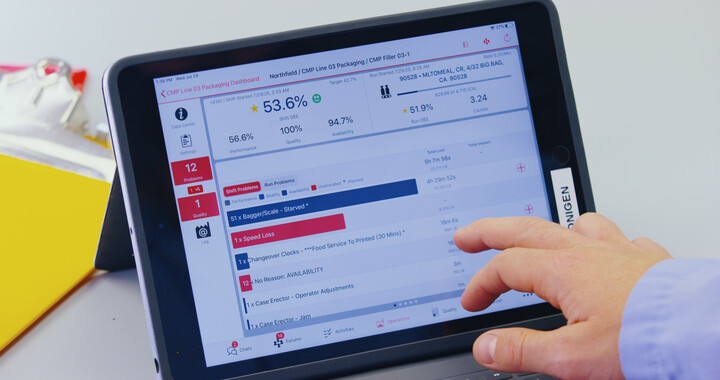
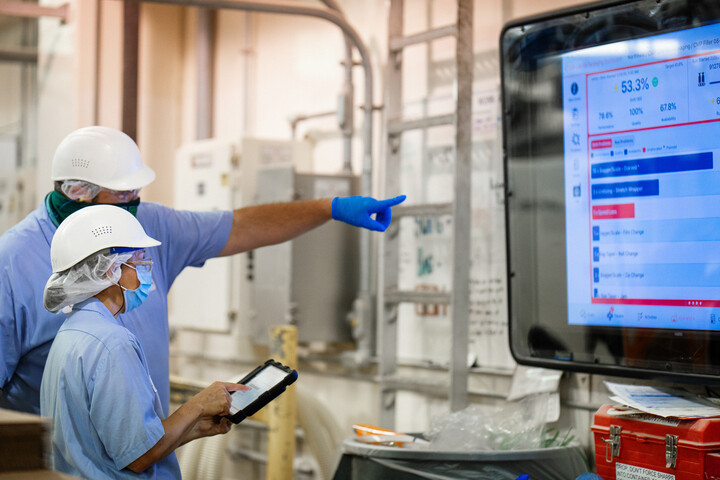
Manufacturing dashboards built around live production data close that visibility gap, surfacing a stalled line or a slipping changeover when it happens, while there's still time to act on it.
{{callout2}}
Common Shop Floor Management Mistakes
The most common mistake is a process nobody follows once the floor gets busy. A standard that lives in a binder but not in daily practice provides no real control at all.
A close second: treating shop floor management as a reporting exercise rather than a real-time one. Reviewing what happened yesterday can't replace catching a problem while the shift still has time to fix it.
Digital work instructions and connected data are what make that shift from looking backward to acting in the moment possible; see Redzone's guide to digital work instructions for how that works in practice.
Redzone Keeps the Shop Floor Synchronized
Shop floor management only works when people, machines, and material stay in sync — not when someone's piecing together what happened after the shift ends.
Redzone keeps that sync real-time: operators and leaders see the same floor at the same moment, so a problem gets caught while there's still time to fix it, not written up in tomorrow's report. That's the difference between a process that lives on paper and one your team runs every shift.
See what that looks like on your floor — book a 30-minute demo.

Frequently Asked Questions
What is shop floor management?
Shop floor management is the day-to-day work of overseeing people, equipment, and production flow on the manufacturing floor: assigning work, tracking status, resolving issues, and keeping output moving toward plan.
What are the three phases in shop floor control?
Shop floor control typically runs in three phases: order release, which documents and authorizes a job to start; order scheduling, which sequences and assigns it; and order progress, which tracks the job through completion.
What is a shop floor system?
A shop floor system is the software or process infrastructure, such as an MES or a connected worker platform, that captures production data, work instructions, and status in real time, so shop floor management decisions can be made on current information.
What does "shop floor employees" mean?
Shop floor employees are the people directly involved in producing goods: machine operators, assemblers, material handlers, and the leads and supervisors managing that work in real time, as distinct from office or administrative staff.
How do you improve visibility on a shop floor?
Visibility improves when production status, downtime, and quality data are captured digitally and displayed where leaders and operators can act on it immediately, rather than reconstructed after the fact from paper logs or end-of-shift reports.