Downtime Tracking in Manufacturing: What It Is and How to Start


published
October 6, 2026
Key Takeaways
Downtime tracking means recording when and why a line stops. The "why" turns raw minutes into a pattern you can act on.
Siemens estimates that unplanned downtime costs the world's 500 biggest companies about 11% of their revenues, and the average large plant still loses 27 hours a month to it.
Manual and spreadsheet tracking are common, but they leave a lag between a stop and anyone acting on it. Real-time, operator-logged tracking closes that gap.Four habits cut unplanned downtime: root-cause tagging on every stop, early-warning capture, standardized changeovers, and usage-based preventive maintenance.
Setting up a tracking system starts with defining categories and reason codes before picking a tool.
Look for downtime tracking software that captures stops in real time and feeds data directly into maintenance workflows.
Downtime tracking is the practice of recording, categorizing, and analyzing every period a machine or production line isn't running as planned. It gives you the evidence to cut unplanned stops, because you can't fix a stop nobody logged. This guide covers what downtime tracking is, how manufacturers do it, what typically causes the most downtime, and how to set up a downtime tracking system.
The cost is hard to ignore. Siemens' The True Cost of Downtime 2024 estimates that unplanned downtime costs the world's 500 biggest companies 11% of their revenue, about $1.4 trillion a year. The average large plant in the industries Siemens surveyed loses 27 hours a month to it.
What Is Downtime Tracking?
Downtime tracking is the process of logging when equipment stops running, why it stopped, and how long the stop lasted. It covers two categories: planned downtime, such as scheduled maintenance, changeovers, and sanitation, and unplanned downtime, such as breakdowns, jams, shortages, and software failures. Teams schedule planned downtime in advance, so it's easier to manage. Unplanned downtime does the damage: It hits without warning and cuts into output and schedules.
Machine downtime tracking pays off when it shows the pattern underneath the total minutes: which machine, which shift, and which reason code keeps showing up. That pattern tells you where to act first.
How Do Manufacturers Track Downtime?
Manufacturers track downtime with three methods. Each differs in accuracy and in the lag between a stop and when someone sees it:
Manual and spreadsheet methods are common because they don't require new tools, but the data arrives too late to act on in the moment. Automated and operator-logged systems capture the stop and its cause as it happens, so teams can respond in real time.
What Causes the Most Downtime in Manufacturing?
Common causes of downtime include equipment failure, human error, material shortages, and software or controls issues. But L2L's 2025 survey of more than 600 US manufacturing leaders points to systemic problems underneath those categories.
Facilities in the survey lose about 30 hours of production a month, and more than half of that downtime is unplanned. Of the leaders surveyed, 67% still rely on reactive maintenance, 74% say delays in reporting problems trigger chain reactions across operations, and 72% acknowledge undocumented fixes that mask the true scope of downtime.
A worn part that goes unnoticed because nobody logged the early warning signs is a visibility problem filed as an equipment failure. That’s why the reason for a stop matters as much as the stop itself.
{{callout1}}
What Is the Best Way to Reduce Unplanned Downtime?
There's no single fix, but the manufacturers that cut unplanned downtime tend to combine four practices:
- Root-cause tagging on every stop: Are you logging why a line went down, or only that it went down? Reason codes let patterns surface over time..
- Early-warning capture: Do operators have a fast way to flag an unusual sound, smell, or vibration? That helps keep a warning from becoming a failure.
- Standardized changeover procedures: Are changeover instructions written clearly, and do operators follow them? Written, standardized steps cut variation between operators and shifts.
- Usage-based preventive maintenance: Are you scheduling service around equipment wear, not just a calendar? That puts maintenance hours where they matter most.
Each practice works best when the underlying data is accurate and timely, which is the main reason to track downtime in the first place. Pair that data with a structured approach to root cause analysis and the patterns get easier to act on.
How Do I Set Up a Downtime Tracking System on My Production Line?
Six steps cover most equipment downtime tracking systems:
- Define your downtime categories and reason codes first: Decide what counts as planned vs. unplanned, and agree on a short, consistent list of reason codes before you collect a single data point.
- Choose a capture method that fits your floor: The right choice — manual, spreadsheet, sensor-based, or operator-logged — depends on your current infrastructure and budget, not which method is "best" in the abstract.
- Standardize how operators log a stop: Consistency matters more than granularity. A simple, repeatable process beats a detailed one nobody follows.
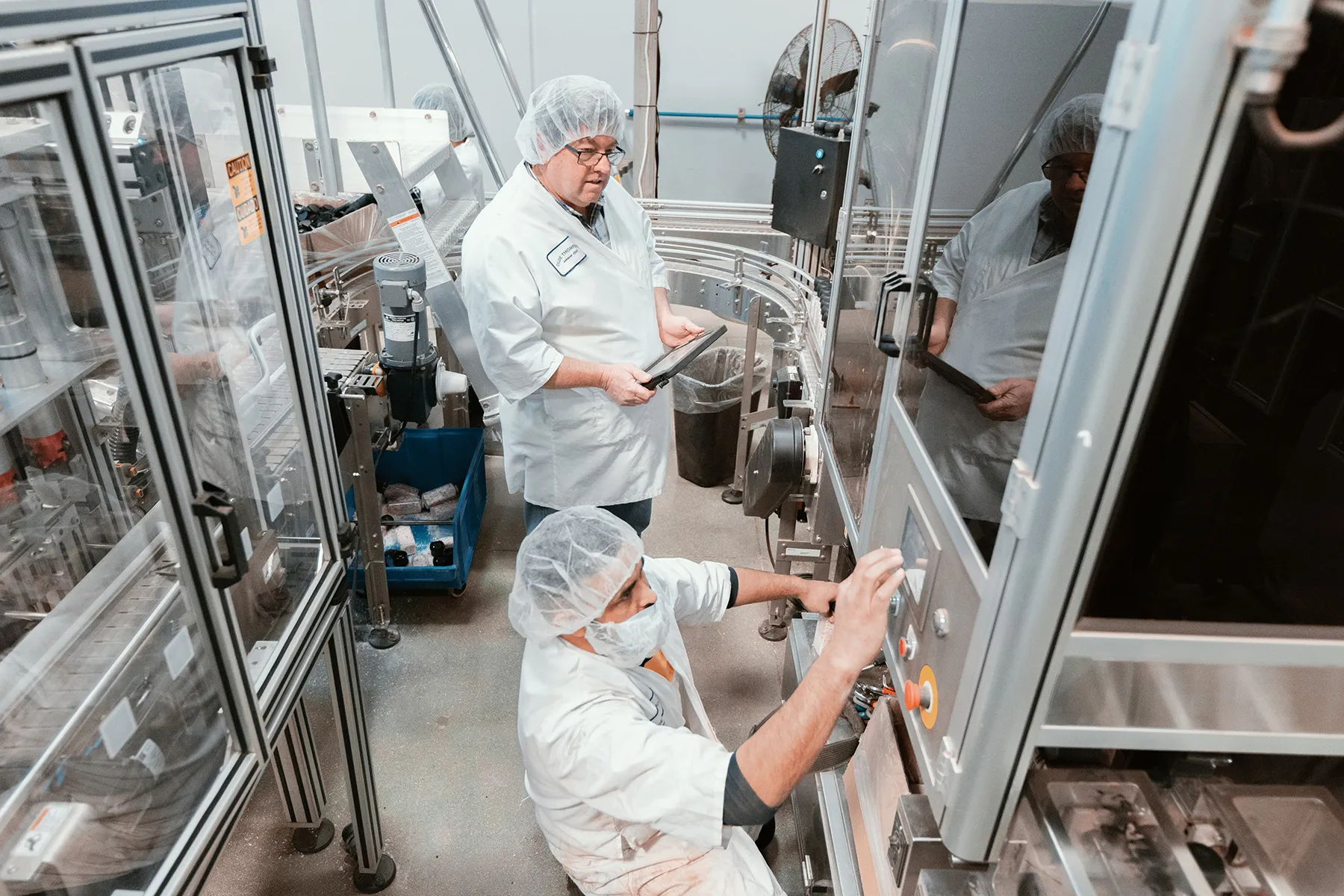
- Train operators and supervisors: Explain why, not only how. People log data more reliably when they know its purpose.
- Build in real-time or near-real-time reporting: Reviewing data hours or days after the shift won't prevent the next stop — it can only explain the last one.
- Create a review cadence: Shift huddles, handoffs, or daily vital-signs meetings where the data drives decisions turn record keeping into improvement.
{{callout2}}
What To Look for in Downtime Tracking Software
If you're evaluating manufacturing downtime tracking software, look for:
- Real-time capture: Does the system flag a stop as it happens?
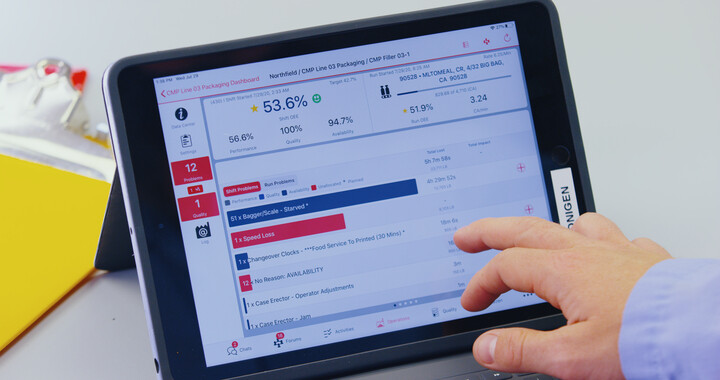
- Low-friction operator input: Can operators log downtime in seconds on tablets or smartphones?
- Reason-code standardization: Does it keep data consistent across shifts and lines?
- Integration with maintenance workflows: Does downtime data feed directly into work orders?
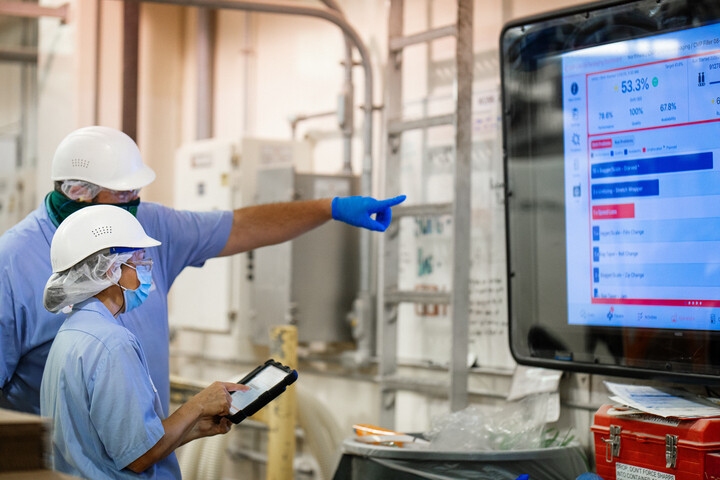
- Usable reporting: Do the dashboards work for floor supervisors making immediate decisions and for plant leadership reviewing trends?
Why Redzone Is the Right Choice for Downtime Tracking
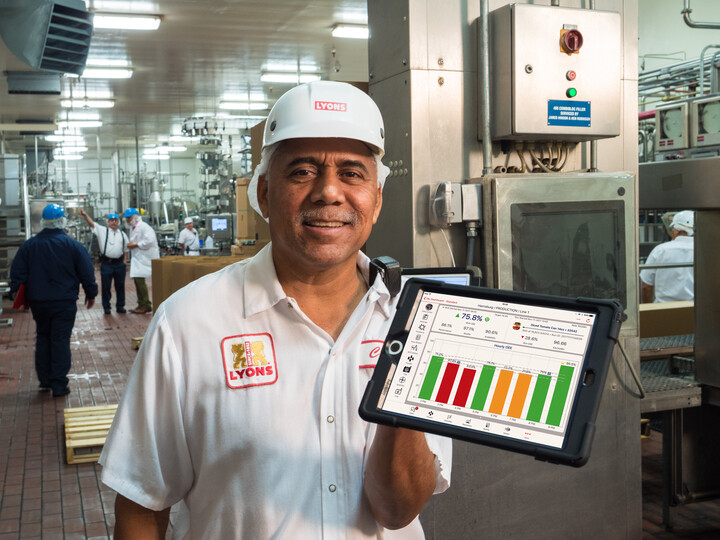
Redzone meets each of these criteria. Redzone Productivity lets operators log downtime and reason codes in real time, at the point of the stop, on the same tablet they use for shift communication.
With Redzone Reliability, operators can send an early warning, such as an unusual sound, from the line straight to maintenance, and the request arrives with photos, video, and OEE data attached. Because the data surfaces in the same huddles and shift handoffs operators already use, tracking becomes part of how the floor runs.
If you're ready to see what real-time downtime tracking looks like on your own line, book a demo.

Frequently Asked Questions
What's the difference between downtime tracking and OEE?
Downtime tracking records when and why a machine isn't running. Overall equipment effectiveness (OEE) is a broader score that combines availability, performance, and quality. . Downtime data feeds directly into the availability component, so better tracking gives you a more accurate OEE score.
Is downtime tracking the same as a CMMS?
Not exactly. A computerized maintenance management system (CMMS) manages work orders, parts, and maintenance schedules. Downtime tracking specifically captures when and why a line stopped. Many platforms, including Redzone, combine downtime tracking with maintenance workflows so the two aren't siloed.
Does downtime tracking require new hardware or sensors?
Not necessarily. You can track downtime manually, on paper or spreadsheets, or through software where operators log stops on a tablet. Sensor-based or IoT capture adds automation but isn't a prerequisite for getting started.
How do you calculate downtime percentage?
Divide total downtime by planned production time, then multiply by 100. For example, 45 minutes of downtime in a 480-minute shift is about 9.4%. Track planned and unplanned stops separately, so the number points to what to fix.
How long does it take to set up downtime tracking?
A paper or spreadsheet system can start within days once you agree on categories and reason codes. Software takes longer. Most Redzone plants go live in 6 to 8 weeks.