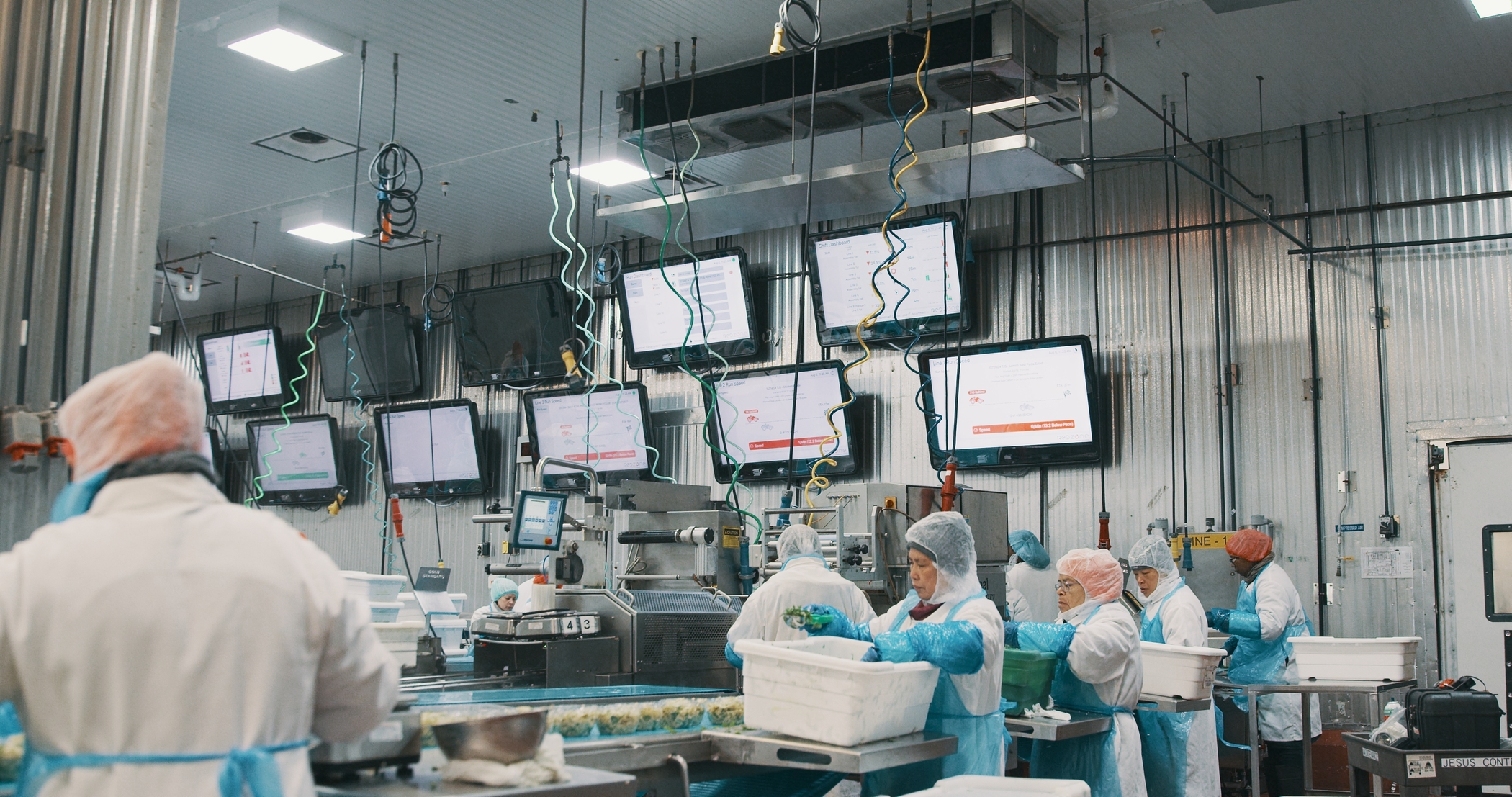
What Is a Manufacturing System? Types, Examples & Selection Guide


.webp)
published
July 27, 2026
Key Takeaways
A manufacturing system is the combination of people, equipment, and processes that converts raw materials into finished goods.
The six main types are discrete, repetitive, batch, continuous process, job shop, and additive manufacturing. Each is suited to different products, volumes, and industries.
Choosing the wrong system for your production requirements costs you output, quality, and margin; the right system, backed by integrated software, becomes a competitive advantage.
Manufacturing software, including ERP, MES, and MOS, makes any production system perform at its potential by connecting data, people, and processes in real time.
What Is a Manufacturing System?
A manufacturing system is the combined equipment, information, processes, and people needed to efficiently convert raw materials into finished products. Manufacturing systems integrate human labor and technology (such as machines, material handling systems, and computer control systems) to manage production, resources, and quality control.
A manufacturing system directly affects your production cost, quality, speed, and flexibility. Pairing a manufacturing system with manufacturing software that smoothly manages the flow of information and materials between people, machines, and processes, can boost performance and profitability, creating a competitive advantage.
To help you decide which system is right for you, we'll review the six most common manufacturing production systems, the best use cases for each, and the software that underpins them.
{{callout1}}
The 6 Types of Manufacturing Production Systems
Manufacturing production systems fall into six major categories, broken down by production volume, flexibility, use case, and other factors.
Discrete Manufacturing
Discrete manufacturing produces countable, tangible goods composed of individual parts. These parts, which are listed on a bill of materials (BOM), can be assembled into finished goods and disassembled back into their components. Changeovers are common, usually driven by multiple product variants. Examples of discrete manufacturing include finished cars, computers, heavy machinery, and furniture.
Repetitive Manufacturing
Repetitive manufacturing uses dedicated assembly lines to mass produce identical or very similar products. It is very efficient for high volume, continuous production but also vulnerable to bottlenecks caused by machine outages. Examples of repetitive manufacturing include soft drinks, automotive subassembly (e.g., car engines), and toothpaste.
Batch Manufacturing
Batch manufacturing produces a predetermined amount of a specific good before changing over to a different product. The entire run goes through each stage simultaneously, and every stage must be completed before the line switches to a different product (e.g., a batch of black socks completes before the line changes to produce white socks). Batch manufacturing is flexible to accommodate spec changes and, because quality control happens naturally during changeovers, mistakes are caught early, reducing waste. Examples of batch manufacturing include candy bars, medication dosages, and clothing.
Continuous Process Manufacturing
Continuous process manufacturing is the uninterrupted flow of production. It is used for standardized, high-volume manufacturing, and it relies heavily on automation to maintain temperatures, pressures, and other factors that affect quality. Changeovers are rare, and reconfiguring a line for a new product can be expensive. Examples of continuous process manufacturing include copy paper, oil and gas refinery, chemicals, and beer.
Job Shop Manufacturing
Job shop manufacturing produces custom goods to fulfill custom or small batch orders. Manufacturing begins once an order is placed, and the workflow and scheduling may change based on each order's requirements. Examples of job shop manufacturing include commercial printing, metal fabrication, and prototyping.
Additive Manufacturing
Additive manufacturing is commonly known as 3D printing. A computer-aided design (CAD) model provides the item's specs, then the 3D printer adds materials (e.g., plastic, metal, ceramics, or resins) to create the finished product. It supports customization and reduces material waste. Examples include prototypes, medical implants, and geometrically complex items.
Manufacturing Systems vs. Manufacturing Software
Manufacturing systems are highly dependent on manufacturing software to achieve real-time visibility, frontline connectivity, and continuous improvement (CI). These tools include:
- Enterprise resource planning (ERP): ERP software plans and manages daily business activities such as supply chain, manufacturing, services, financials and other processes. It consolidates accounting, procurement, HR, project management, customer relationship management, risk management, compliance, and supply chain operations into one system, reducing manual reconciliation and errors and simplifying compliance reporting and audit trails.
- Manufacturing execution system (MES): MES software manages, monitors, and controls manufacturing production, providing real-time visibility into machine status, work-in-progress, yield rates, etc. It's a critical tool in regulated industries, because it traces lots and batches. An MES excels at process control and equipment visibility, but it does not inherently drive CI.
- Manufacturing operating system (MOS): An MOS offers purpose-built tools to manage manufacturing production cycles, equipment maintenance, and quality control. It connects people, processes, and machines into a unified platform that breaks down silos, reducing response time to production issues and driving continuous improvement. Agentic AI amplifies MOS tools by using real-time factory data to handle routine tasks, avoid downtime, and make recommendations to improve quality.
Together, these tools give manufacturers the visibility and control to hit production targets consistently.
{{callout2}}
How To Choose the Right Manufacturing System
Choosing the right manufacturing system depends on five factors: what you make, how much you make, what your quality requirements are, what your workforce looks like, and what your technology stack can support. No one system is best — the right choice is the one that fits your production.
Product type and variety: If you produce a standard product at high, consistent volume, repetitive or continuous manufacturing offers the best cost efficiency. Variable product lines with multiple SKUs or configurations point toward discrete or batch systems, because they handle changeovers better. For custom or low-volume work — prototyping, specialized components, one-off fabrication — concentrate on job shop or additive manufacturing.
Volume and demand patterns: High, steady demand rewards the efficiency of repetitive or continuous manufacturing systems. Seasonal or variable demand calls for the flexibility of batch or discrete manufacturing, which can scale up or down easily. For unpredictable or low demand, job shop and additive systems keep fixed costs down by manufacturing only upon actual orders.
Quality and compliance: These requirements can narrow your options significantly. Industries subject to FDA, GxP, or ISO standards — pharma, food and beverage, medical devices — typically need batch or discrete systems because robust lot traceability is built-in. Less regulated environments have more flexibility, though quality control is always a must.
Labor and skill availability: Highly automated systems like continuous and repetitive manufacturing need fewer specialized operators, so they're less sensitive to frontline turnover. However, they need strong maintenance and reliability capabilities to prevent outages. People-intensive systems like job shop and additive manufacturing require skilled, adaptable workers, who can be difficult to replace. Up-to-date training, knowledge retention, and connected worker tools can protect against the effects of attrition.
Technology integration: Any manufacturing system will underperform if your ERP, MES, or MOS can't support it. Before committing to a system, confirm that your software can handle the system's data flows, traceability requirements, and real-time visibility. Also, examine whether the system can integrate with your existing tools without significant custom development.
Modern Trends Shaping Manufacturing Systems
Manufacturing is evolving quickly to keep up with rising customer expectations, regulatory pressures, and global competition. Smart factory tech is reshaping the factory, transforming production from manual, paper-based management to automated and AI-powered digital operations.
These four trends are making a significant impact on manufacturing by changing what's possible within each manufacturing system type. This makes flexibility and software integration more important than ever.
Smart Manufacturing
According to Deloitte research, 92% of manufacturers "believe smart manufacturing will be the main driver for competitiveness over the next three years" due to its operational and financial benefits. By capturing and integrating data across a plant (or even multiple plants), then using automation and analytics to interpret that data, smart manufacturing technologies help manufacturers solve difficult, hard to understand problems.
Hybrid Systems
Many manufacturers are combining different manufacturing systems to meet customers' requirements, cope with supply chain disruptions, or gain market advantages. For example, a contract manufacturer might use continuous process manufacturing to make a common pain reliever, but switch to batch processing for labeling, divided between the brand name, a generic, and a retailer's private label.
AI and Real-Time Data
Agentic AI paired with real-time data is reducing unplanned downtime and enabling faster decisions on the plant floor. By analyzing what's actually happening on the plant floor, these tools are helping frontline productivity by autonomously preventing errors, solving equipment issues before they turn into outages, and triggering operator workflows that drive productivity gains.
Connected Worker Platforms
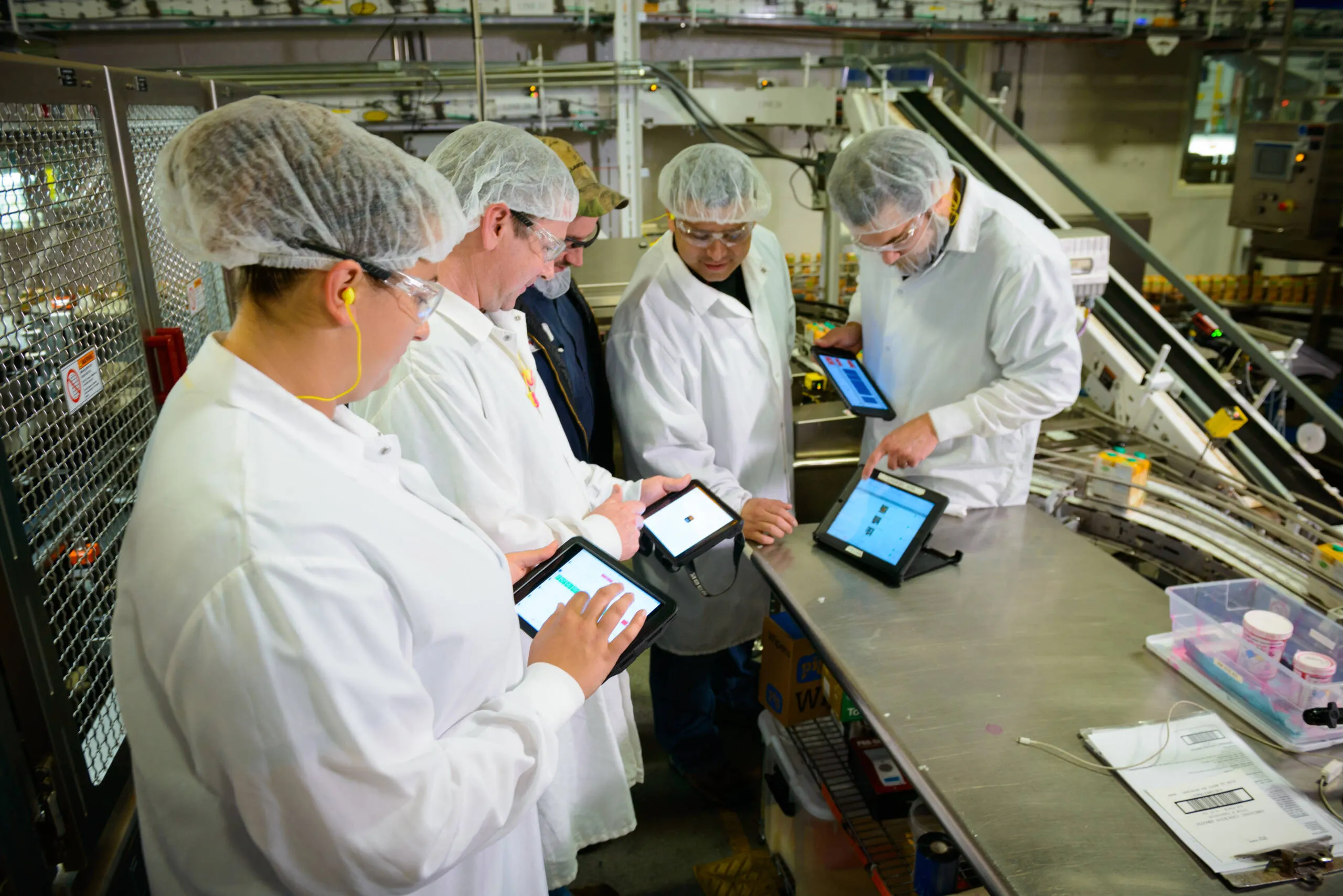
A connected workforce platform links production, quality, and maintenance teams so they can communicate and act in real time. It speeds troubleshooting and problem resolution, improves workforce knowledge, and cuts unplanned downtime to improve productivity, reduce downtime, and boost overall equipment effectiveness (OEE).
The Bottom Line
Choosing the right manufacturing system (or hybrid system) is a critical decision. The wrong system for your production requirements costs you quality, output, and profitability, whereas the right manufacturing system — backed by software that connects your people, data, and processes in real time on the shop floor — is a competitive advantage. Redzone is the operational layer that integrates across your manufacturing stack, driving a 29% productivity boost 90 days after implementation. Book a demo to see how Redzone fits your operation.

Frequently Asked Questions
What is a manufacturing operating system (MOS)?
An MOS is a digital backbone for factory operations, providing the structure, visibility, and control to manage day-to-day operations and long-term initiatives. Features include real-time performance monitoring, frontline collaboration, and continuous improvement tracking.
What's the difference between a manufacturing ERP system and a manufacturing system?
ERP software manages business processes, including HR, finance, and supply chain. A manufacturing system is the production methodology that manages production, scheduling, and maintenance on the shop floor. Both are necessary for a successful manufacturing operation.
What's the difference between a manufacturing execution system (MES) and a manufacturing system?
A manufacturing execution system (MES) manages shop floor processes. A manufacturing system refers to the overall production methodology, including the people, equipment, and software (e.g., MES) that make it run.
What are the six types of manufacturing systems?
The six types of manufacturing systems are: discrete, repetitive, batch, continuous process, job shop, and additive manufacturing.

.jpg)