Best CMMS Software for Manufacturing (2026)


.webp)
published
October 9, 2026
Key Takeaways
The best CMMS for a manufacturing plant is the one technicians and operators use. A feature only counts if work orders get opened and closed on the floor.
Most CMMS tools are built around the maintenance team. When comparing, check who else can submit a request and what information arrives with it.
Per-user pricing looks cheap at five technicians and climbs fast at 50. Price the tier you'll need in year two.
Limble, MaintainX, and UpKeep lead on ease of adoption. Fiix suits plants running Rockwell Automation controls, and eMaint suits condition-monitoring programs on Fluke sensors.
Redzone Reliability fits plants where breakdowns keep repeating, because it runs CMMS on a TPM foundation in the same system as production, quality, and training.
The first person to notice a bearing going bad is the operator who stands next to that machine eight hours a day and knows exactly how it sounds on a good day.
Most CMMS software is built for what happens after that operator speaks up: the work order, the parts pick, the repair, and the history. The tools on this list handle that part well. The gap is usually earlier, when the operator has to track down a supervisor, who flags a planner, who finally opens a ticket — half a shift can pass before anyone picks up a wrench.
This guide compares six CMMS platforms for manufacturing. You'll find a buyer's scorecard, a side-by-side table with published pricing, things to watch for, and a short guide to matching a tool to your situation.
What Is CMMS Software?
A computerized maintenance management system (CMMS) organizes a plant's maintenance work in one place. It schedules preventive maintenance (PM), tracks work orders from request to close, keeps an asset register with full repair history, and manages spare parts.
Most platforms also report the key metrics reliability teams track, such as mean time between failures (MTBF), mean time to repair (MTTR), and PM compliance. For the full definition, see Redzone's guide to what a CMMS is, and if you're weighing a broader platform, CMMS vs. EAM covers where the two split.
{{callout1}}
Where a Standalone CMMS Stops
A standalone CMMS knows a lot about your assets and very little about your lines. It can tell you a conveyor motor was replaced on Tuesday. It usually can't tell you whether that line also lost time to minor stops all week, or whether the operator on nights was ever trained on the daily lubrication check.
That context lives in production and training systems. When planners can see it, they go after the reason a machine keeps failing. When they can't, the same work order comes back every month under a new number.
Why Operators Belong in Your Maintenance Program
Total productive maintenance (TPM) puts routine equipment care in operators' hands through clean, inspect, and lubricate (CIL) checks and early reporting. A CMMS that supports TPM also lets operators log what they see from the line and attach production data to the request, so the technician arrives already knowing what happened when the machine stopped. Planned maintenance programs get sharper when the people closest to the equipment feed them.
The Best CMMS Software for Manufacturing in 2026
Here are six CMMS platforms worth a spot on a manufacturing shortlist. Redzone comes first, and the rest follow in no particular rank, each with the plant it fits best. Pricing reflects what each vendor publishes as of September 2026, so confirm details before you sign.
*Vendor-published pricing as of September 2026. Per-user tiers often gate inventory, integrations, and multisite features, so price the tier you'll need.
Redzone Reliability
Best for: Midmarket and enterprise plants where the same breakdowns keep returning and the fix depends on operators, maintenance, and production working from one shared view of the line. It's a strong fit for food and beverage, CPG, and industrial manufacturers.
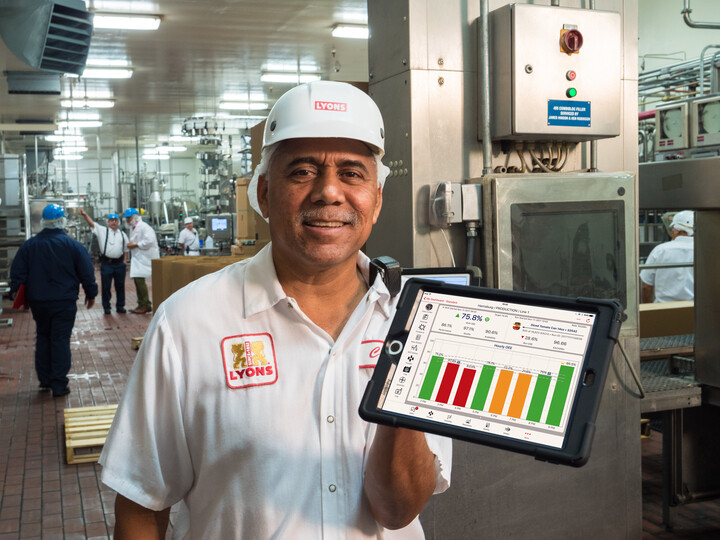
About: Redzone is the #1 Connected Workforce Solution for manufacturing, and Redzone Reliability is its CMMS, built on a total productive maintenance (TPM) foundation. Operators send a maintenance request from the line in seconds. Each one reaches the technician with photos, video, and the line's OEE data.
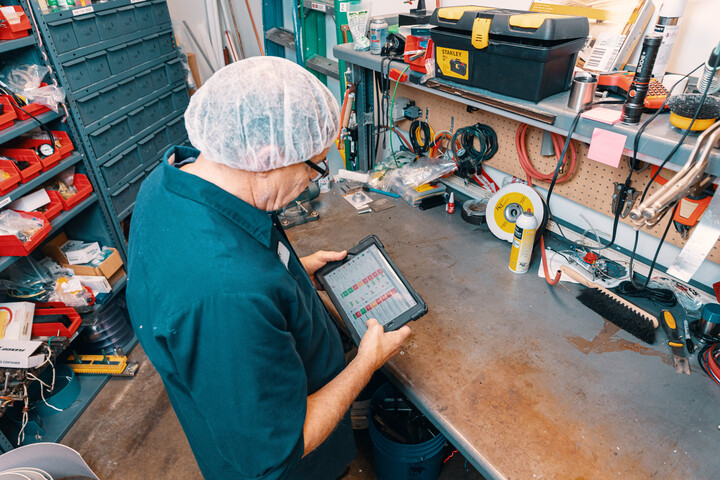
Technicians work from digital work orders and guided PM checklists, and PMs and CIL checks can be triggered by a shift change, asset uptime, or the calendar. Parts inventory, asset history, and MTBF and MTTR reporting sit in the same system.
The bigger difference is everything around the CMMS. Maintenance shares one platform with production tracking, quality, training, and scheduling, so a planner can see the downtime behind a work order and a supervisor can see who still needs training on a CIL routine. Every deployment includes Redzone coaches who have worked in plants and can get your team fluent during a 90-day deployment.
ChampionAI monitors equipment and line data for early warning signs and recommends next steps, and your team makes the call.
Redzone integrates with QAD, SAP, Oracle NetSuite, and other systems, and includes translations for multilanguage support.
Published results: Redzone reports an average 4.8-point OEE uplift, a 7.9% productivity increase in 90 days, and a 24% reduction in unplanned downtime for plants using Reliability.
Watch for: Redzone asks more of a plant than a standalone CMMS does. Operators take on daily equipment care, supervisors keep the routine going, and plants that treat it as a work-order tool get less out of it. If you run a small maintenance crew and mainly need to get off paper, one of the per-user tools below will get you there faster and for less. Already happy with your current CMMS? Redzone's TPM platform can run alongside it.
{{callout2}}
Limble
Best for: Maintenance teams that need technicians to adopt the system fast.
About: Limble built its reputation on ease of use. Reviewers on G2 and Capterra consistently call out its clean interface, mobile app, and responsive support, and small teams can get live quickly. It covers the CMMS core, including work orders, PM scheduling, parts inventory, and configurable dashboards, and it tracks asset history down to the component level. Pricing is per user across tiered plans, with a free plan for small teams.
Watch for: Limble serves facilities, property, and fleet teams as well as plants, so production context like OEE or line events isn't part of the core product. Reviewers also note that deeper reporting, multisite management, and integrations sit on higher tiers.
MaintainX
Best for: Plants with a large workforce reporting issues and a smaller team fixing them.
About: MaintainX is a mobile-first CMMS with unusually transparent pricing. Its free Basic plan covers work orders and procedures, and paid plans run $20 per user per month for Essential and $65 for Premium on annual billing. For manufacturers, the standout detail is that requester accounts are free on every plan, so operators can report problems without adding paid seats. Built-in messaging keeps the back-and-forth attached to the work order.
Watch for: Parts inventory, purchase orders, and API access start at Premium, and multisite tools and IoT integrations require the custom-priced Enterprise tier. Once you need inventory, every paid user moves to the higher rate.
Fiix
Best for: Plants standardized on Rockwell Automation controls.
About: Fiix, a Rockwell Automation company, covers work orders, PM scheduling, assets, and parts. Its AI engine, Fiix Foresight, reviews maintenance history to surface failure trends and suggest PM intervals. The standout is its connection to Rockwell's FactoryTalk platform, which lets machine signals open Fiix work orders directly. Pricing is published, starting with a free plan, then $45 per user per month for Basic and $75 for Professional, with Enterprise quoted.
Watch for: The integration advantage is strongest in Rockwell environments, so give it less weight if your lines run other controls. Review roundups also point to support response times as a recurring complaint.
eMaint
Best for: Reliability programs built on condition monitoring and regulated sites that need audit trails.
About: eMaint, a Fluke company, pairs a configurable CMMS with Fluke's condition-monitoring sensors. When a sensor reading crosses a threshold you set, eMaint creates a prioritized work order with the asset history and parts availability already attached. It ships prebuilt compliance frameworks for FDA 21 CFR Part 11 and ISO 55001, with electronic signatures and complete audit trails, plus more than 200 prebuilt integrations. eMaint puts a typical implementation at about eight weeks.
Watch for: That depth comes with setup work. Reviewers describe eMaint as highly configurable and slower to get started than lighter tools, so budget time for configuration and training. Pricing is tiered per user and quoted, and individual features are also sold à la carte.
UpKeep
Best for: Smaller maintenance teams that want to get organized on mobile quickly.
About: UpKeep is a mobile-first CMMS that covers work orders, preventive maintenance, assets, and parts, with requester access for people who only submit issues. Paid plans start at $24 per user per month. For teams that want help getting started, UpKeep offers a professional setup service that handles configuration, data migration, and a team training session within 45 days.
Watch for: Features that growing plants tend to need, like advanced reporting, API access, and multisite management, sit on higher tiers. Before rolling it out to a full production floor, confirm how many requester seats your plan includes.
How to Evaluate CMMS Software: A Buyer's Scorecard
Feature lists in this category look nearly identical. Every tool in this guide handles work orders, PM scheduling, asset records, and mobile access. The differences show up in who can use each feature, what it costs to add, and how the system holds up across shifts.
Bring this scorecard to every demo. The weights are a starting point, so shift them toward whatever your plant needs the most. A plant with 20 technicians and 200 operators might push request intake to 30%. A single-site shop moving off paper might put mobile experience and rollout at the top.
How to Use the Scorecard to Compare CMMS Tools
Rate each criterion from 1 to 5 during the demo, multiply by the weight as it applies to your factory, and add it up. Note the evidence beside each score, whether it's a screen the vendor showed or the pricing tier they quoted. That record keeps your evaluation grounded in what your team saw.
How To Choose the Right CMMS for Your Plant
Before you book a single demo, answer one question honestly: When a machine starts acting up, how does maintenance find out? The answer points you toward the right kind of tool.
If You're Moving Off Paper or Spreadsheets
In year one, adoption beats depth. Limble, MaintainX, and UpKeep get technicians working in a mobile app quickly, and their free or low-cost entry plans let you build the habit before committing budget.
Small plants without a big IT team usually land here. Midsize plants that want operators involved from day one can also look at Redzone Reliability, where coaches guide the rollout.
If Your Equipment Is Already Instrumented
If you've invested in sensors or run Rockwell controls, choose the CMMS that turns those signals into work orders. eMaint fits Fluke condition-monitoring programs, and Fiix fits plants standardized on FactoryTalk.
If the Same Breakdowns Keep Coming Back
Repeat failures often trace to something outside the maintenance shop, like a skipped lubrication check or an operator nobody trained on the new line. A work-order tool will log each repair accurately and still miss the pattern. That's the problem Redzone Reliability was built for, since operators, production data, and training share a system with the work order. Pair it with a structured approach to root cause analysis and the pattern gets easier to see.
If You Already Own a CMMS
Switching systems is expensive, and the CMMS you already pay for may not be the problem. If work orders run fine but operators still sit outside your maintenance program, look for a TPM layer that works alongside it. Redzone Reliability can run next to an existing CMMS, so you keep your asset records and add operator care routines on top.
Why Redzone for CMMS Software
Most CMMS tools start when a work order opens, and Redzone starts with the operator who noticed the problem first. Redzone Reliability runs on a TPM foundation inside the same Connected Workforce Solution as production, quality, training, and scheduling, so each request reaches maintenance with the context a technician needs.
Redzone coaches work beside your team to make operator care and fast response part of how every shift runs. See how Redzone Reliability connects maintenance to your production floor.

Frequently Asked Questions
What is the best CMMS software for manufacturing?
It depends on how your plant finds and fixes problems. Redzone Reliability fits plants that want operators, production data, and maintenance in one system. Limble, MaintainX, and UpKeep suit teams focused on fast adoption, while Fiix and eMaint fit instrumented equipment.
How much does CMMS software cost?
Most CMMS tools charge per user per month. Published plans in this guide run from free entry tiers to $75 per user per month, with enterprise tiers quoted. Redzone prices per site instead of per user. Budget for requester seats, implementation, and integrations.
What CMMS is best for a small or midsize manufacturer without a large IT team?
Look for a cloud CMMS with a strong mobile app, low-cost requester access, and guided onboarding. MaintainX, Limble, and UpKeep suit small teams moving off paper. Redzone Reliability suits midsize plants: operators submit requests from mobile devices, and Redzone coaches guide the rollout.
Which CMMS platforms include mobile apps for technicians?
All six tools in this guide offer iOS and Android apps. The differences show up in offline access, which features each tier includes on mobile, and whether operators can submit requests from the same app.
What is the difference between CMMS and TPM?
A CMMS is software that manages maintenance work, including work orders, PM schedules, and spare parts. Total productive maintenance (TPM) is a methodology that makes equipment care a shared job between operators and maintenance. The strongest programs run TPM routines through a CMMS.