Best Connected Worker Platforms for Manufacturing in 2026



.webp)
published
October 9, 2026
Key Takeaways
Connected worker platforms put live data, instructions, and communication in operators' hands. The category spans training, work instructions, AI guidance, app building, inspections, and downtime response, and few platforms do all of it well.
Platforms differ by focus. Redzone is best for frontline productivity gains. Poka leads on training and skills, Parsable on step-by-step work instructions, Augmentir on AI, Tulip on build-it-yourself apps, Weever on inspections and sanitation programs, and L2L on downtime response.
Choosing on feature count is how plants end up with shelfware. Start with the problem that costs you the most this year, then ask who coaches your team after go-live.
Ask every vendor how it connects to your machines, your enterprise resource planning (ERP) and manufacturing execution systems (MES), and your maintenance system. A platform that stays in its own lane won't change much on the floor.
What Is a Connected Worker Platform?
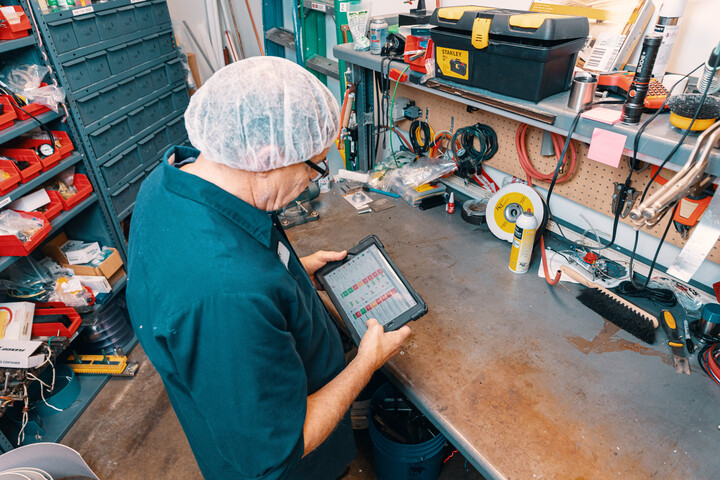
A connected worker platform is software that gives the people on the production floor live information, instructions, and a way to communicate, then feeds what they see and do back to supervisors, engineers, and leaders.
Operators, technicians, and quality assurance (QA) staff use it on tablets or phones at the line. The best ones also connect to machines and business systems, so a problem that happens at 2 am reaches the right person.
How Is a Connected Worker Platform Different From MES or ERP?
Vendors designed enterprise resource planning (ERP) software and manufacturing execution systems (MES) to plan and record production for planners and engineers, and their screens show it. A connected worker platform starts with the operator. It fills the gap between what the MES says should happen and what is happening at the line. Most plants run all three, and a good platform connects to the systems already in place instead of replacing them.
The Best Connected Worker Platforms for Manufacturing at a Glance
The connected worker platform category splits by focus, so manufacturers should evaluate tools based on their most important need. To that end, we reviewed seven leading platforms using the same criteria. Details come from vendor websites and public sources as of October 2026, so confirm specifics in a demo before you buy.
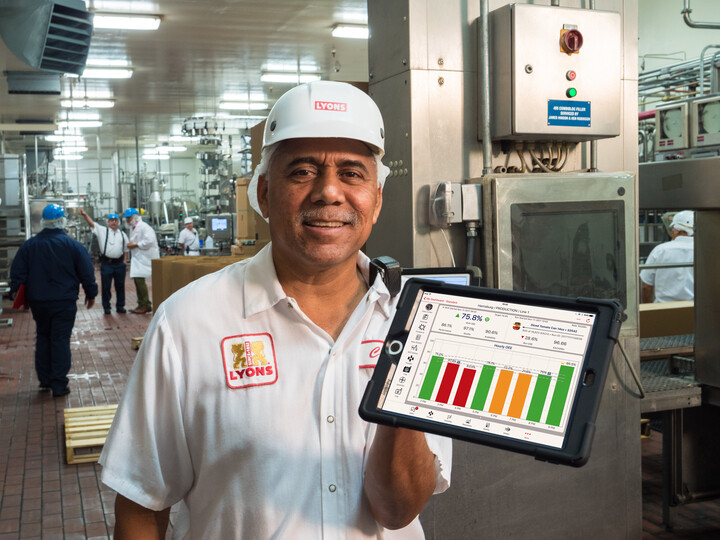
Redzone is the best connected worker platform for manufacturers that want to lift frontline productivity quickly. It puts live production data in operators' hands and adds ChampionAI to point each team at its next fix. Coaches with real frontline experience then work alongside your people through rollout. The six other platforms here are strong in their own lanes, and one of them may fit your plant better.
{{callout1}}
What Should a Connected Worker Platform Include?
Look for a platform that includes:
- Live production and downtime data at the line, not in a report the next morning.
- Digital work instructions, checklists, and quality checks.
- Communication and action tracking, so every problem gets an owner and a due date.
- Training and skills records, especially for new operators.
- Connections to machines, ERP, MES, and maintenance systems.
- Analytics across lines and sites with AI that points to what to fix next.
No platform does all six equally well, so let your biggest pain point drive the decision. We'll review that decision tree below.
Why Manufacturers Are Adding Connected Worker Platforms
Two pressures keep coming up. Downtime is expensive: Siemens' The True Cost of Downtime 2024 found that the average large plant loses 27 hours a month to unplanned stops. Getting a line running again now takes 81 minutes on average, up from 49 five years earlier, and Siemens blames part of that on a skills and knowledge gap after experienced maintenance people left.
Another pressure is the people. The Manufacturing Institute and Deloitte estimate that US manufacturing could need as many as 3.8 million additional employees between 2024 and 2033, and that as many as half of the skilled openings could go unfilled.
A connected worker platform won't solve either problem alone. It does shorten the time a new hire needs to gain a veteran's experience, and the time a team needs to react when a line stops.
For more on how Redzone approaches this, see our connected worker guide and our post on tribal knowledge.
How We Compared the Platforms
Each platform was measured against the same six questions.
- Operator adoption: Will a first-year operator use it without being reminded?
- Machine and system connections: Does it reach equipment, ERP, MES, and maintenance tools?
- Rollout and coaching: Who helps your team change habits after go-live?
- Time to value: How soon do you see a measurable result?
- Fit for your industry: Does it handle your quality, safety, and compliance requirements?
- Cost model: Is pricing per user, per site, or per app? What features grow as you do?
The 7 Best Connected Worker Platforms for Manufacturing
1. Redzone
Best for: Manufacturers that want to raise frontline productivity fast, with coaching included.
About: Redzone is a Connected Workforce Solution built around the people running the line. Operators see live OEE and tag every stop as it happens, and teams huddle around the numbers. Action management gives every issue an owner. Productivity, Compliance, Reliability, Learning, and Scheduling share one platform, so production data, quality checks, maintenance, training, and planning use the same insights.
Coaches who have real frontline experience work with your team through rollout, helping them build new routines into daily workflows, which is where most software programs stall. ChampionAI then looks across lines, shifts, and loss categories and recommends the improvement most worth pursuing, with a playbook for carrying it out.
More than 2,000 factories use Redzone. In Redzone's 2026 Frontline Workforce Engagement Study, 150 plants saw engagement scores rise 81% and turnover fall 35% in the 90 days after deployment, based on before-and-after surveys and independent onsite audits. Coil Specialist's vice president, James Averett, put it this way: "Our productivity showed a 37% uplift in the first 90 days."
It includes:
- Live production data and loss tracking designed for operators.
- A structured 90-day deployment and coaching program.
- Connects to QAD, SAP, Infor M3, Oracle, and MaintainX, plus machines through sensors and APIs.
- Production, quality, maintenance, learning, and scheduling on one platform.
Watch for: Redzone works best where leadership commits to frontline visibility and continuous improvement. It is not an app builder, so teams that want to design custom no-code apps from scratch may prefer Tulip.
Rollout and pricing: Most plants go live in 6 to 8 weeks. Pricing is custom, based on plant size and scope.
{{callout2}}
2. Poka
Best for: Enterprises where training, skills, and knowledge capture are the main problem.
About: Poka, now part of IFS, focuses on learning and daily management. Digital work instructions with video and images, skills matrices, forms, checklists, and issue management live in one system, and operators can record and share their own tips. The company says its platform runs in hundreds of global factories, and G2 named it a Market Leader in its Fall 2024 grid for enterprise connected worker platforms.
It includes:
- Strong training and skills tracking.
- Knowledge sharing between shifts and sites.
- Track record at multiplant scale.
Watch for: Poka is built around learning and daily routines more than live production-loss data. If OEE is your main goal, ask how it handles live machine data.
Pricing: Custom quote.
3. Parsable
Best for: Standardizing complex, multistep work across sites.
About: Parsable, part of CAI Software since its 2024 acquisition, turns paper SOPs into step-by-step digital procedures and records data as operators work through them. It covers manufacturing and heavier industries such as oil and gas, with use cases across maintenance, production, quality, and safety.
It includes:
- Photos, video, and files attached to individual job steps.
- Audits and inspections for routine checks.
- Messaging tied to specific tasks.
Watch for: Guided execution is its home turf. Look closely at scheduling and production-loss reporting if those matter to you.
Pricing: Custom quote.
4. Augmentir
Best for: Manufacturers that want AI at the center of frontline operations.
About: Augmentir leads with its AI layer. The Augie assistant builds forms, checklists, and work instructions from your existing documents, and AI Agent Studio lets teams create custom agents for training, quality, and maintenance without writing code. Digital work instructions and skills management come with it.
It includes:
- Generative AI for building content fast.
- Skills management.
- Broad industry coverage.
Watch for: Confirm which integrations, such as single sign-on and ERP connectors, are included in the base subscription.
Pricing: Subscription-based; request a quote.
5. Tulip
Best for: Teams that want to build their own frontline apps.
About: Tulip is a no-code, drag-and-drop app builder with a connectivity layer that pulls in data from machines, sensors, and devices. Operator input and machine data land in the same app, which suits plants with unusual processes that no off-the-shelf product fits. A library of ready-made apps gives teams a starting point.
It includes:
- Flexibility to build exactly what a process needs.
- Prebuilt connectors for machines, PLCs, and sensors.
- Compliance features for regulated settings.
Watch for: Someone on your team has to build and maintain the apps, so budget for that. Confirm current pricing and which add-ons cost extra.
6. Weever
Best for: Inspections, sanitation, quality, and safety programs.
About: Weever digitizes the checklists plants already run, from safety and quality checks to master sanitation schedules, 5S, and autonomous maintenance. A failed check automatically becomes an action item with an owner and a due date. Pricing is by site rather than by user, which keeps costs predictable as operator headcount grows.
It includes:
- Forms modeled on existing paper checklists.
- Action tracking from every failed check.
- Multisite templates and dashboards.
Watch for: Weever does not collect machine data directly from equipment. It connects to MES, CMMS, and SAP instead.
Pricing: Custom, based on site count and programs.
7. L2L
Best for: Cutting unplanned downtime and speeding maintenance response.
About: L2L captures every stoppage, dispatches the right person to fix it, and tracks how long the response takes. Work orders, preventive maintenance, and shop floor execution run in one flow, alongside digital checklists and audits.
It includes:
- Downtime, dispatch, and work orders in one flow.
- Real-time status by production area.
- Preventive maintenance scheduling.
Watch for: It centers on maintenance and downtime. Plants whose main need is training, engagement, or quality programs should look at broader platforms.
Pricing: Custom quote.
How To Choose a Connected Worker Platform
Start with the problem that costs you the most this year, then match it to a platform's home turf.
- Output and engagement are the problem: Start with Redzone.
- Training and turnover: Look at Poka and Parsable.
- Paper checklists and audits: Look at Weever.
- A unique process and in-house builders: Look at Tulip.
- Maintenance response: Look at L2L.
- AI-led content and guidance: Look at Augmentir.
Which connected worker solution is best for your industry? Food and beverage plants should read our guide to the best OEE software for food and beverage manufacturers. Process and heavy industrial plants should read our guide to the best connected worker software for industrial manufacturing. If OEE alone is the job, start with our guide to evaluating OEE software.
Questions to Ask in Every Demo
- Can a night-shift operator with a week on the job use it without help?
- What happens, step by step, when a check fails or a line stops?
- Who coaches my team after go-live, and for how long?
- How does it connect to our ERP, MES, and maintenance system?
- What does the contract cost at 50 users, 200 users, and three sites?
Why Redzone Is the Right Choice for Connected Worker Platforms
Redzone's Connected Workforce Solution starts with the people on the line and the coaches who work alongside them through rollout. Productivity, quality, maintenance, training, and scheduling share one platform, so a fix on one line doesn't create a problem on the next. It connects to the ERP, historian, and MES systems you already run, and ChampionAI points each team to its next best improvement.
See how Redzone's Productivity software puts your frontline in charge of the numbers.

Frequently Asked Questions
How much does a connected worker platform cost?
Most vendors quote by plant, site, or user count, and few publish rates. Redzone pricing is custom and depends on plant size and what you deploy. A demo is the quickest way to get a cost for your sites.
How long does it take to implement a connected worker platform?
It depends on the platform and how much you configure. Most Redzone plants go live in 6 to 8 weeks.
Do I still need a connected worker platform if I have an MES?
Usually, yes. An MES schedules and records production for planners and engineers, while a connected worker platform gives operators live data and tools at the line. A good one connects to the MES you already run.
What should I ask a connected worker platform vendor in a demo?
Ask how a night-shift operator with a week on the job would use it, what happens when a check fails or a line stops, and who coaches your team after launch. Also ask how it connects to your ERP, MES, and maintenance system.