Best QMS Software for Life Sciences Manufacturing (2026)




published
October 23, 2026
Key Takeaways
QMS software for life sciences manufacturing controls documents, training, deviations, corrective and preventive actions (CAPA), change control, and audit trails in a system that regulators can inspect.
Document-centric QMS platforms serve the quality unit, and shop-floor systems capture checks and records where production happens. Many regulated plants run one of each.
21 CFR Part 11 sets the baseline for electronic records: validated systems, limited access, and secure, time-stamped audit trails. Ask each vendor what validation documentation ships with the product and what your team still owns.
Pharma and device needs differ. Device makers now work under FDA's Quality Management System Regulation (QMSR), effective February 2, 2026, while drug makers follow Current Good Manufacturing Practice (cGMP) in 21 CFR Parts 210 and 211.
Redzone Compliance fits plants that want cGMP checks, training, and production data connected at the line, alongside a document-centric platform for controlled documents.
Under FDA 21 CFR Part 11, an electronic record must have secure, computer-generated, time-stamped audit trails that show when each record was created, changed, or deleted, without overwriting earlier entries. That standard shapes how life sciences manufacturing plants evaluate QMS software.
Most platforms meet it for controlled documents, investigations, approvals, and signatures. The harder question is the manufacturing floor, where a deviation starts with an operator, a reading, or a skipped check long before it becomes a record.
What Is QMS Software for Life Sciences Manufacturing?
A quality management system (QMS) is the set of processes, procedures, and records a manufacturer uses to make a product that meets specification and regulatory requirements. QMS software digitizes that system. In life sciences, which covers pharmaceutical, biotech, and medical device plants, the software also has to support validation, electronic signatures, and inspection readiness.
Most platforms cover document control, training records, deviations and nonconformances, CAPA, change control, audits, and supplier quality. Many add electronic batch records or connect to a manufacturing execution system (MES) that holds them.
{{callout1}}
What 21 CFR Part 11 Means for Your QMS Software
21 CFR Part 11 governs electronic records and electronic signatures that FDA-regulated companies use in place of paper. Redzone's guide to 21 CFR Part 11 walks through the full requirements, but three expectations drive most software vendor evaluations.
Validated Systems and Limited Access
Section 11.10 requires companies to validate systems for accuracy, reliability, and consistent intended performance, and to limit access to authorized individuals. A vendor can supply validation packages, but your company still has to validate the system for your plant. Ask each vendor what documentation comes with the product and which testing falls to your team.
Audit Trails and Electronic Signatures
Signed electronic records must show who signed them, when, and why, and the signatures must link to their records, so no one can copy or move them elsewhere (sections 11.50 and 11.70). Unless signatures use biometrics, section 11.200 requires at least two distinct identification components, such as an ID code and a password. Test this in the demo: Change a record, then ask the vendor to show the audit trail entry.
Data Integrity That Goes Beyond the Software
FDA's guidance on data integrity and cGMP compliance says "complete, consistent, and accurate data should be attributable, legible, contemporaneously recorded, original or a true copy, and accurate (ALCOA)." When the regulations don't specify an audit trail review frequency, the guidance recommends setting it based on risk assessments and internal practices. Software supports those habits, and operators build them. A check recorded on the floor when the activity occurs is more reliable than a form completed at the end of the shift.
Document-Centric eQMS vs. Shop-Floor Quality Systems
Two kinds of tools carry the QMS label, and the difference guides which questions to ask.
Document-centric platforms such as MasterControl, Veeva Vault QMS, TrackWise, and Qualio serve quality professionals. They excel at controlled documents, change control, investigations, and validated workflows.
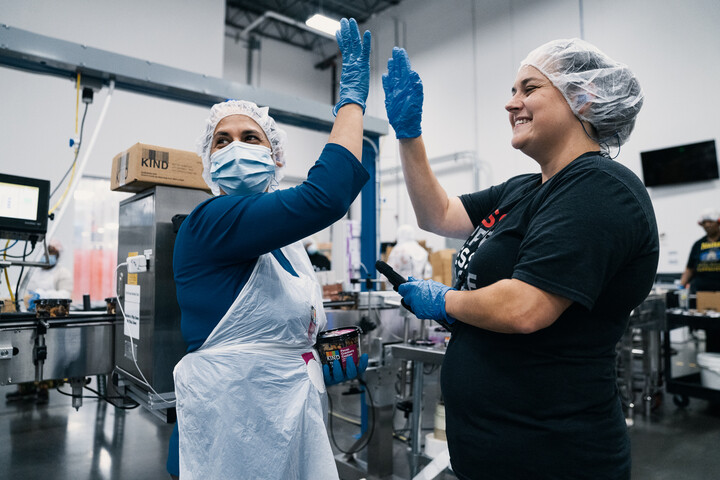
Shop-floor systems such as Redzone Compliance serve the people running the line. They put digital checks, current standard operating procedures (SOPs), and escalations on a tablet next to the equipment, so a failed check starts corrective action while the batch is still in front of the team.
Plenty of regulated plants run both. Before you book demos, decide which kind of problem costs you more: records that take too long to approve, or deviations that surface too late.
The Best QMS Software for Life Sciences Manufacturing in 2026
Here are six platforms to consider on a life sciences shortlist. Details reflect vendor-published information as of October 2026, so confirm specifics during your evaluation.
*None of the vendor pages we reviewed list prices as of October 2026. Ask each vendor for implementation, validation, and per-user costs in writing.
Redzone Compliance
Best for: Pharma, nutraceutical, and medical device plants that want cGMP checks, training, and production records tied together at the line.
About: Redzone is the #1 Connected Workforce Solution for manufacturing, and Redzone Compliance is its quality management system built for the shop floor. Operators complete digital checks tied to embedded product specifications, so pass or fail is automatic and the system flags a nonconformance when a check fails. Configurable triggers escalate a failed check immediately. CAPA, fishbone, and 5 Whys workflows then take the issue from containment to a verified fix, with documentation ready for an auditor.
Operators work from the current SOP on any device, and live dashboards show each check on each line by shift. Because quality shares a platform with production and maintenance data, a quality event traces to the machine, shift, or changeover behind it. Redzone supports 21 CFR Part 11, GMP, ISO 13485, and ISO 9001 programs, connects to your existing ERP and MES, and runs in dozens of languages. Coaches with frontline experience join each deployment and work beside your team for the first 90 days.
Published results: Redzone reports that life sciences plants average a 12.7-point OEE uplift and a 33.3% productivity increase within 90 days. Best Formulations reports a 70% productivity increase, and RxSight says Redzone helped the plant reach the next level of operations and scale beyond it.
Watch for: Redzone Compliance centers on line-side checks, training, and corrective action. Teams that mainly need controlled document workflows, regulatory submissions, or design controls will find more depth in the document-centric platforms below, and many regulated plants pair the two. Ask early which validation documentation applies to your intended use. Line-side quality also asks operators to own their checks, which takes coaching and supervisor support to stick.
{{callout2}}
MasterControl
Best for: Pharma, biotech, and medical device manufacturers with complex document, training, and batch record requirements.
About: MasterControl's Quality Excellence suite covers document control, change control, training management, audit management, risk management, and quality event management. Add-ons cover postmarket, supplier, regulatory, clinical, and analytics needs. Its Manufacturing Excellence product adds electronic batch records and MES features, connecting quality to production records on regulated lines. The vendor lists integrations with ERP, MRP, and laboratory information management system (LIMS) software and says its tools shorten validation time.
Watch for: MasterControl quotes pricing by users and modules, and reviewers on TrustRadius and Capterra often describe it as expensive for smaller companies. Plan for configuration and adoption time. Because it's purpose-built for life sciences, manufacturers outside regulated industries may pay for depth they won't use.
Veeva Vault QMS
Best for: Life sciences companies that want quality connected to other Veeva applications and to external partners.
About: Veeva Vault QMS is a cloud quality management system with workflows for complaints, deviations, audits, quality risk management, supplier quality, and change control. External partners can collaborate on investigations, audit findings, corrective actions, and supplier change control inside the system. It integrates with other Veeva Quality Cloud applications and with Veeva's regulatory, safety, and clinical applications, which matters most if you already run them.
Watch for: Pricing isn't stated on the vendor page, and the page doesn't describe its validation approach, so ask for release validation documentation and how your team handles updates. Its main advantage is integration with other Veeva tools, so weigh it less if the rest of your stack runs on other systems.
Qualio
Best for: Small and midsize life sciences companies building their first electronic QMS.
About: Qualio is a cloud eQMS with modules for documents, design controls, risk management, training, change control, audits, CAPA and nonconformances, suppliers, and analytics. The vendor says it performs most of the validation work for customers, using an approach based on FDA and Good Automated Manufacturing Practice (GAMP) guidelines, with prebuilt templates and automated document packs. Reviewers consistently praise its interface and onboarding, and Qualio says most customers go live within 30 to 60 days.
Watch for: Qualio aims at small and midsize companies, so large multisite operations should check fit carefully. Pricing isn't published on its page, and an implementation fee applies to each plan. Ask what the vendor-performed validation package covers and what remains your responsibility.
TrackWise (Honeywell)
Best for: Pharma, biotech, and medical device companies, from single sites to global enterprises, that want a configurable cloud QMS.
About: Honeywell's TrackWise is a cloud QMS that connects quality events, CAPA, documents, training, and complaints. It includes preconfigured workflows, electronic signatures, audit trails, automated approval routing, and audit-ready reports, and it connects to ERP, PLM, and MES systems. Companion applications cover the annual product quality review, management review metrics, and recall management. Honeywell says built-in frameworks support 21 CFR Part 11, GMP, and ISO standards. It reports 700+ implementations and 825,000+ end users.
Watch for: Honeywell says smaller deployments go live in weeks, while enterprise rollouts with thousands of users take three to six months. Pricing isn't published. Honeywell calls TrackWise pre-validated but doesn't say what validation documentation comes with it, so ask what's included and what testing your team still owns. Honeywell says smaller deployments go live in weeks, while enterprise rollouts with thousands of users take three to six months. Pricing isn't published.
Dot Compliance
Best for: Smaller pharma, biotech, medical device, and cosmetics companies that want an eQMS with electronic batch records.
About: Dot Compliance offers an eQMS with modules for document management, training, change, complaints, quality events, CAPA, supplier quality, audits, equipment, electronic batch records, and risk, plus an AI product called Dottie AI. The vendor acknowledges that many smaller life sciences organizations find 21 CFR Part 11 compliance difficult, and it offers a free Part 11 checklist.
Watch for: The vendor page doesn't state a validation approach, an implementation timeline, or pricing. Get each in writing, and ask for a reference customer of your size and product type.
How To Evaluate QMS Software: A Buyer's Scorecard
Each platform in this guide handles document control and CAPA. The differences show up in what ships for validation, how quickly a failed check becomes a record, and who in the plant can use the system.
Bring this scorecard to demos. The weights are a starting point, so move them toward the problem that costs you the most. A contract manufacturer with 30 customer audits a year might weight Part 11 and validation support higher, and a plant that struggles with late deviations might push shop-floor capture to 25%.
How To Use the Scorecard
Rate each criterion from 1 to 5 during the demo, multiply by your weight, and add up the results. Write the evidence beside each score, whether it's a screen the vendor showed or a document they promised. Then ask each finalist for a reference customer in your subindustry that uses the features you care about most.
How To Choose the Right QMS Software for Your Plant
Before you book a demo, answer one question: Do your quality problems start in the records or on the line? The answer points you toward the right kind of tool.
Pharma vs. Medical Device: How the Rules and QMS Priorities Differ
FDA's Quality Management System Regulation (QMSR) incorporates ISO 13485:2016, which makes risk management a requirement across the quality system. Many platforms serve both pharma and medical devices, so test the modules that match your product: For drugs, that means batch record links. For medical devices, put design controls and risk management near the top of your scorecard.
If You Run Pharma or Biotech Manufacturing
Look for validated document control, deviation and CAPA workflows linked to batch records, and strong audit trails. MasterControl, Veeva Vault QMS, and TrackWise fit large regulated operations. Plants running continuous processes can also read how continuous manufacturing in pharma changes batch record expectations, and the difference between GMP and cGMP explains the "current" in the rule.
If You're a Smaller Team or Need a First eQMS
Smaller teams usually choose adoption speed and templates over breadth. Qualio and Dot Compliance aim at this group.
If Your Quality Problems Start on the Line
Late deviations often trace to a skipped check, an outdated SOP, or an operator not trained on a new procedure. A records system logs each deviation accurately and still misses the pattern. Redzone Compliance targets that gap, with checks, digital work instructions, and training in one place. For what happens after a check fails, see the nonconformance to CAPA workflow.
Why Redzone Is the Right Choice for Life Sciences QMS Software
Many quality records in a regulated plant start on the line, so Redzone's Connected Workforce Solution puts digital checks, current SOPs, and training in front of the people who make the product. Redzone coaches with frontline experience help operators turn cGMP checks into routines, and a failed check reaches a corrective-action workflow while the batch is still in front of the team.
Redzone Compliance integrates with the platforms your quality unit already uses, sharing records instead of competing for them. See how Redzone Compliance keeps your plant audit-ready between inspections.

Frequently Asked Questions
What is the best QMS software for life sciences manufacturers?
It depends on where your quality problems start. MasterControl, Veeva Vault QMS, and TrackWise fit document-heavy pharma quality units, Qualio and Dot Compliance suit smaller teams, and Redzone Compliance fits plants that need checks at the line.
How do pharmaceutical manufacturers manage electronic batch records and deviations in a QMS?
Most platforms open a deviation linked to the batch, route it for investigation and approval, and attach corrective actions. Electronic batch records usually sit in a manufacturing module or a connected MES, while the QMS holds the investigation and release decision.
What is the difference between QMS software for medical devices and pharmaceutical manufacturing?
Device makers follow 21 CFR Part 820 as amended by the QMSR, which incorporates ISO 13485:2016, while drug makers follow 21 CFR Parts 210 and 211. Many platforms serve both, so check module fit for design controls and batch records.
How much does life sciences QMS software cost?
Vendors quote pricing by users, modules, sites, and validation scope, and none of the vendor pages we reviewed list prices. Ask for implementation, validation, and training costs in writing. Redzone prices Compliance per site.
How long does it take to implement a QMS in a regulated plant?
Honeywell says smaller TrackWise deployments go live in weeks and enterprise rollouts take three to six months. Qualio says most customers go live within 30 to 60 days. Validation scope and the number of sites drive the range. Redzone says most factories see results go live with Compliance in 60 days, coaching included.