Wholesale Bakery Drops Yield Loss to 3% and Landfill Waste by 92%
Industry
Food & Beverage
Employees
80+

Summary
Objective
Give bakers a way to see the day’s schedule and flag problems themselves, reversing years of undocumented processes that left them guessing and the bakery remaking 25% of its dough.
Solution
Deployed four Redzone modules between 2017 and 2022, starting with Productivity through a coached 90-day sprint across 320 SKUs.
Fill rate up from 96% to 99.5%
Yield loss down 88%, from 25% to 3%
Landfill waste down 92%
Customer complaints down from about seven a month to four
Mock recalls cut from two hours to 30 minutes
Trash efficiency up from $6 to $26 of sales per pound of trash
Bakers finish in 8.5 hours instead of staying an hour and a half late
Employee turnover down from 80% to 50%, saving the company nearly $500K a year
A 98% compliance score the sales team now takes to customers
All four Redzone modules live between 2017 and 2022

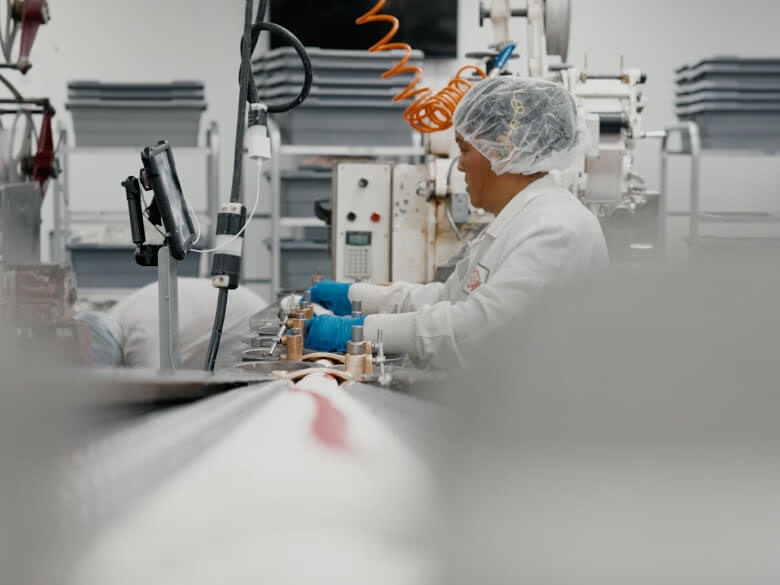
Companion Baking Company bakes bread and pastries in a 45,000-square-foot facility in St. Louis. The food and beverage manufacturer sells fresh to area restaurants and artisan grocers, ships frozen bread farther afield, and runs a café and catering business. With more than 80 employees, 65 work on the floor across four bread dividing lines, a pastry line, 10 rack ovens, and two deck ovens.
The bakery competes on research and development, customization, and small batches built to order. “We cater to our customers and build what they want,” says Suman Shekar, Operations Manager. Between 2017 and 2022, Companion Baking implemented four Redzone modules. After deployment, yield loss fell from 25% to 3%, landfill waste declined 92%, and the fill rate climbed from 96% to 99.5%.

The Challenge
Shekar joined Companion Baking in 2016 with a mandate to improve operational efficiency. Processes were largely undocumented, so there was little to measure and less to work from. The first thing she found was a communication problem.
“Every single one of our bakers said that it would be really nice if we could have some sort of digital communication about the schedule, whether they’re behind, on-time, or doing well for the day,” she says. “Our baking team didn’t have insights into each day’s process flow and whether they’d need to make adjustments and stay late to finish work. As a result, they felt blindsided every single day.” ~ Suman Shekar | Operations Manager, Companion Baking Company
Compliance was no better. “We weren’t reporting in real time,” Shekar says. “It felt like our traceability didn’t exist. We knew we should be doing better.”
And the bakery was throwing away a quarter of what it made. Yield losses ran at 25%, much of it dough remade because the numbers came out wrong, and the volume caused problems for the company’s waste hauler.
Why Companion Baking Chose Redzone
Shekar first saw the Redzone Connected Workforce Solution at a customer event and was taken with the communication tools and the digital compliance processes. “Why don’t we have this already?” she thought. Then she decided the bakery wasn’t ready for it: It needed to document its own processes and baselines first. So she ran time studies across 320 SKUs to learn how long each task took in practice.
Her priority was uncommon. Most manufacturers open the conversation asking about OEE; Shekar wanted to optimize the activities tied to individual SKUs, and she wanted the specific communications features her bakers had asked for.
Companion Baking’s leaders talked to other vendors and found they would be billed for every functionality update, while Redzone could adapt to the bakery. One of those vendors, a software development company, settled it. “We said that Redzone has communication tools like chats and huddles and digital documentation,” Shekar says. “And the vendor said, ‘You should not sign up with us; you need to go with them.’”
The Rollout
Companion Baking started with Productivity in 2017 and finished with Learning five years later.
Starting With Productivity and a 90-Day Sprint
Redzone coaches worked with the team through a 90-day sprint built on five standard Lean goals.
- Creating a visual factory, including OEE measurements that workers could see in real-time
- Coaching operators and supervisors to adopt Lean production techniques and collaborative problem-solving skills
- Improving OEE by at least eight points by the end of the sprint
- Achieving cost savings of $500K+ for smaller factories and $1M+ for larger factories, as verified by their finance functions
- Sustaining all gains made in the first 90 days and improving them moving forward
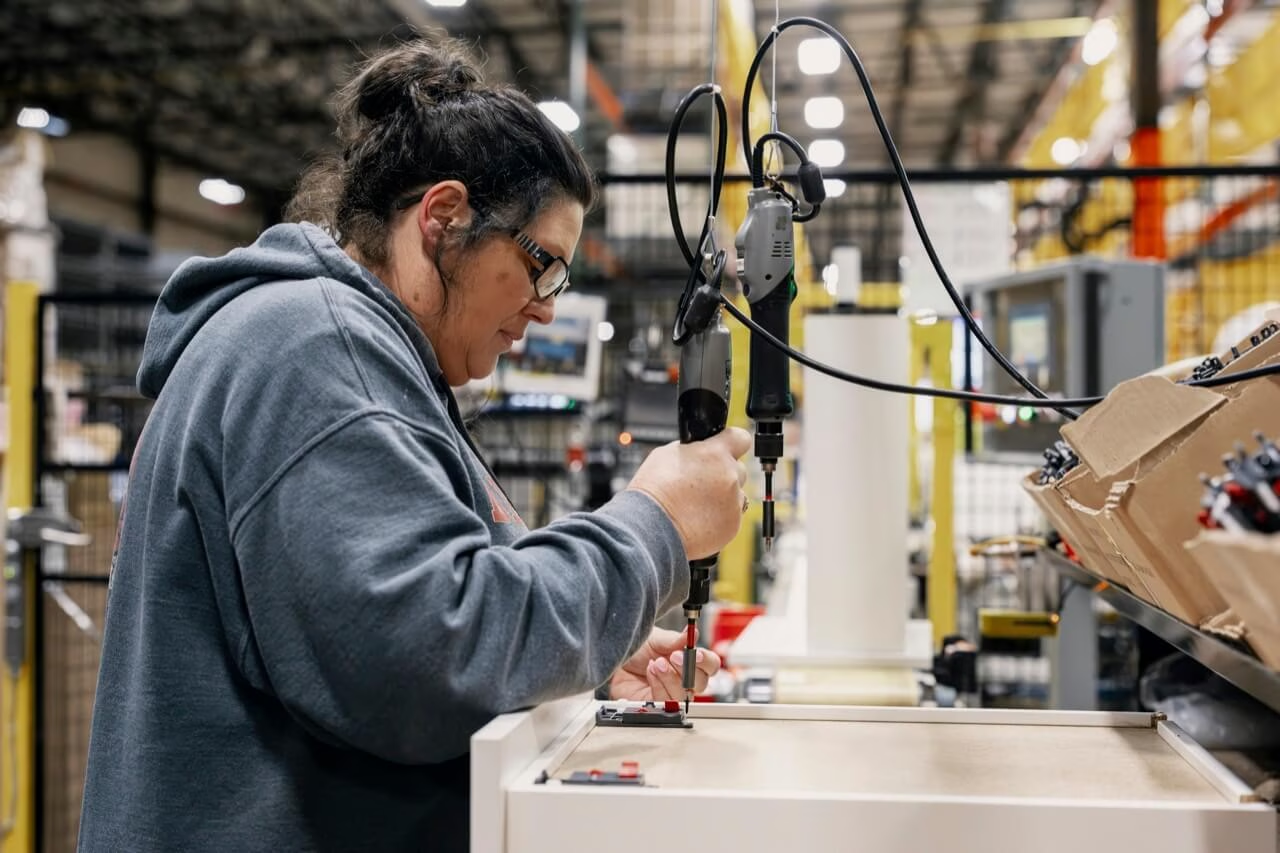
The bakery put sensors on key equipment, including the dividing machines and the case packers, then gave frontline workers a digital identity and the tablets to go with it, ruggedized to survive a bakery floor.
Getting the Floor on Board
Adoption was not smooth. Team members found the system complicated at first, and the production team was moving from undocumented work to capturing data at every stage of the breadmaking cycle.
So Shekar sat down with two of the company’s lead mixers and walked them through what the data capture was for. They told her how to simplify it so that it matched the way production ran. After that, team members started using the system and suggesting processes of their own to capture.
The numbers moved fast once they did. OEE climbed 30% within two months and 60% by six months. “Now, on day-to-day runs, it’s at 80% and above,” says Shekar.

Adding Compliance, Reliability, and Learning
That was enough for leadership to commit to the rest of the platform. Compliance came next, then Reliability, then Learning in 2022. The sanitation, maintenance, and sales teams all ended up on it alongside the bakers.
The Results
Waste and Yield
“We realized that trash was our problem,” says Shekar. “We were remaking dough over and over because we weren’t getting the correct yield … Now, we’ve changed our compactor to a composter, we recycle, and generate just a small amount of trash.”

Better data and new equipment took yield loss from 25% to 3% and landfill waste down 92%. The bakery even built a metric around it: trash efficiency, sales divided by pounds of trash, up from $6 to $26 in six years.
Compliance and Traceability
“Everyone was onboard with using Redzone by the time we launched Compliance and began asking if we could build checks for different processes,” says Shekar. “That was the best part.”
Monthly walkthroughs, dough temperature checks, and barcode checks keep the bakery aligned with the Food Safety Modernization Act. A mock recall that took two hours now takes 30 minutes, and customer complaints have dropped from about seven a month to four, mostly about color or slicing rather than food safety. The sales team now quotes the bakery’s 98% compliance score to customers.
Reliability
Work orders used to run through a Computerized Maintenance Management System (CMMS) the bakers found too complicated to bother with. At the start of the pandemic, a large mixer went down for three weeks, costing 20,000 pounds of dough.
“It was a lot for us to lose,” says Shekar. “Very quickly, we realized that we could have prevented the breakdown. Our bakers told us they heard a funny noise, but this information didn’t reach the maintenance crew.” ~ Suman Shekar | Operations Manager, Companion Baking Company
Now a baker who hears something wrong photographs or films it and it routes straight to maintenance, where a reliability coordinator reviews the symptoms. “If they notice something that’s a little loose, we can fix it and prevent a catastrophic event,” Shekar says.
People and Learning
New hires used to find the processes intimidating enough to wonder whether to stay. They now get a username, a buddy, a tour, and a welcome video before they touch a line, and every department built its own training library.
With dough temperature data in the system, bakers can tell when a batch will be ready to divide, proof, and bake, so they finish in 8.5 hours instead of staying 90 minutes late. The fill rate has risen from 96% to 99.5%.
Turnover has fallen from 80% to 50%, which Shekar puts at close to $500,000 dollars a year saved.
Conclusion
“Pick the area you most want to focus on and take it to the next level,” says Shekar. “For our company, it was improving communication, but the bonus was driving productivity.” ~ Suman Shekar | Operations Manager, Companion Baking Company
That is the part she keeps returning to. “Redzone has partnered with us in important ways, helping us make improvements that we didn’t even know were possible,” she says.
Somewhere on your floor, someone already knows what is about to break. Book a demo and see how Companion Baking got that information to travel.